

Newport Beach Sailing Charters & Yacht Rentals maintains clear Newport Beach pet policies that prioritize safety and comfort for all guests. Only service animals are permitted aboard, while ordinary pets are not allowed on charter vessels. Understanding these rules before booking helps families plan appropriate care arrangements and ensures a smooth day on the water.
Here's what we break down: the current service animal policy, ADA qualification rules, planning steps for guests traveling with a service animal, and the etiquette every guest should know before stepping aboard.
Newport Beach Sailing Charters & Yacht Rentals follows a strict animal policy outlined in its charter FAQ. Only service animals are permitted aboard, so ordinary pets cannot accompany guests on sailing excursions. This policy applies consistently across every vessel in the fleet.
The restriction protects guests and crew from safety hazards unique to marine environments. Boats move unpredictably, creating risks that exceed those found at stationary venues. Clear policies let the charter team prepare proper accommodations for service animals while keeping operations safe.
Newport Beach Sailing Charters & Yacht Rentals confirms in its FAQ that only service animals are permitted. Ordinary pets, including dogs, cats, birds, and other companion animals, are not permitted on any vessel in the fleet.
The distinction between service animals and pets comes from federal accessibility requirements and safety standards. Guests planning day charters should arrange pet care in advance; the charter team can recommend local boarding facilities or pet-sitting services for guests visiting from outside Newport Beach.
Under ADA Titles II and III, service animals are dogs individually trained to perform tasks for people with disabilities. Emotional-support and comfort-only animals do not qualify, since the task performed must relate directly to the handler's disability.
Businesses with no-pets policies generally must modify those policies to allow service animals into public areas open to customers. The charter team distinguishes service animals from emotional-support animals to comply with accessibility law while keeping operations safe.
Boats have limited disposal and cleanup space compared to land-based venues. Waste management systems on yachts cannot handle pet waste without creating sanitation and odor issues for later guests. Limited storage means crews cannot set aside space for pet supplies or emergency cleanup equipment.
Upholstery, teak decks, and specialized marine surfaces need careful maintenance to prevent staining and damage. Pet hair, scratches, and bodily fluids create restoration costs that affect vessel availability and guest experience.
Guests relying on service animals should contact the charter team when booking to plan vessel selection, boarding procedures, rest areas, and water access. Early communication prevents complications and helps match your group to the most comfortable vessel layout.
The captain and crew provide guidance on movement patterns, rest zones, and safety protocols specific to each yacht. Planning your charter with service-animal needs in mind helps both handler and animal enjoy a safe, relaxed experience.
Mention the service animal when booking so the team can match vessel layout and boarding needs. Confirm the route and duration, and ask which vessel is most comfortable for your group size, mobility needs, and animal dimensions.
Different yachts offer varying deck configurations, cabin access, and shade coverage. Catamarans provide a wider beam and a stable platform, while monohulls have narrower walkways, so discussing these factors helps the team recommend a fit that keeps the dog secure aboard.
Bring water, a mat or towel, waste bags, medication, and any needed harness or leash. A non-slip mat gives the dog a settled place away from lines, ladders, and active deck areas.
Pack sealed water bowls, treats, spill-safe food, and cleanup supplies to keep the vessel clean throughout the charter. Use a leash or harness during boarding, docking, and periods of increased boat traffic.
Listen to the captain's briefing to understand movement zones, emergency procedures, and restricted areas. Follow instructions on where the service animal may rest, and keep the animal clear of lines, railings, galley areas, and boarding zones.
Arrive early for the safety briefing to allow time for boarding without rushing. Understanding yacht charter etiquette rules protects both service animals and passengers from preventable accidents.
Yacht charters enforce stricter pet restrictions because boats present unique environmental and safety challenges not found on land. Movement, wet surfaces, and limited escape routes create hazards for animals unfamiliar with marine environments.
Charter operators must balance accessibility requirements with Coast Guard safety mandates and liability considerations. Restricting pet access, except for trained service animals, reduces the variables the captain must manage while underway in shared waterways.
Boats move unpredictably, and spills happen even in calm conditions. Wet decks, ladders, railings, wind, sun, and engine noise are part of every charter, creating disorientation and stress for animals unaccustomed to the marine environment.
Sun, salt air, and movement can dehydrate animals quickly, requiring constant monitoring. Trip, fall, and entanglement risk near railings, swim platforms, and sailing lines increases when animals move freely, so sailing with a dog calls for controlled positioning in high-traffic areas.
Newport Harbor is one of the largest recreational harbors in the United States. Hundreds of vessels transit daily, creating constant wake and navigational traffic that require crew focus, and animals unfamiliar with this environment may react to sudden motion or noise unpredictably.
The harbor's popularity means charter yachts share anchorage and docking space with fishing boats, tour vessels, and personal watercraft. Safe and spacious charters depend on controlled boarding areas and clear deck zones, and uncontrolled animals raise collision risk during congested operations.
Coast Guard safety guidance warns against riding on the bow, gunwale, transom, or seatbacks, where occupants could fall overboard. These same areas pose an equal or greater risk to animals lacking the balance to adjust to sudden wake or course changes.
Limited space amplifies every safety concern, from line entanglement to galley hazards. A pet-friendly charter model would need dedicated crew to supervise animal positioning, and most charter operations do not carry that staff ratio while also maintaining navigation and guest service.
Families planning charters should arrange pet care before departure to eliminate stress on charter day. Many Newport Beach area services offer day boarding, allowing same-day pickup after your return.
Communicating pet care arrangements to your family removes last-minute complications and allows full focus on the sailing experience. First-time charter guests benefit from checklists that include pet planning alongside packing, timing, and provisioning.
Research local boarding facilities or pet-sitting services well before your charter date, and confirm availability, drop-off times, and any required vaccination records. Booking care early avoids a last-minute choice between canceling the charter or leaving pets unattended.
Consider asking neighbors, friends, or family to provide in-home care if your pet experiences stress in kennels. Some mobile pet-sitting services offer daytime visits for feeding and walking, letting you enjoy family pet time on land while respecting Newport Beach onboard rules at sea.
Kids age 12 and under are required by law to wear a life jacket. Babies count as passengers under Coast Guard regulations, so every person aboard contributes to vessel capacity limits.
Parents must account for children's needs when calculating passenger count and space requirements. Family adventures on the water demand the same advance planning as service-animal accommodation. Discuss your full group composition, including ages and mobility needs, during booking.
Confirm passenger count, ages, and special needs when booking, and arrive about 15 minutes before the scheduled charter to complete boarding without rushing. Bring snacks, beverages, sun protection, and comfort items children might need during the voyage.
Follow the captain's safety briefing closely, ensuring children understand movement restrictions and emergency procedures. Designate one adult to supervise young children continuously, especially near railings and swim platforms.
Charter guests may bring prepared food and beverages to enjoy during their voyage. Provisioning lets you customize your onboard experience, and the charter team provides guidance on packing methods that prevent spills.
Knowing what you can bring and what to avoid helps protect vessel surfaces and keeps conditions pleasant for all guests. A few simple substitutions prevent unnecessary cleanup or safety hazards.
Prepared food and beverages, including alcohol, are allowed aboard Newport Beach Sailing Charters & Yacht Rentals vessels. Red wine is discouraged since it can stain teak decks and marine fabrics, and day charters include the yacht, captain, safety gear, and cleanup, but not food or beverages.
Pack finger foods, sandwiches, and items that travel well in coolers or insulated bags. Boats move, and spills happen, so sealed, spill-resistant packaging protects your provisions and the vessel, and skipping messy or heavily sauced items keeps cleanup simple.
Balloons and confetti are not allowed for environmental and navigational reasons. Decorations are allowed inside only and must not obstruct the captain's view of surrounding water and traffic, and any decor must be secured to prevent movement.
Interior spaces offer room for banners, tablecloths, and small centerpieces that enhance a celebration without interfering with operations. Consult the charter team about attachment methods that avoid damaging surfaces or creating entanglement hazards.
Anything loose, distracting, or messy needs care aboard a moving boat. The crew provides cleanup supplies, but guests should address spills immediately to prevent spreading or staining. Napkins, towels, and designated waste receptacles keep conditions pleasant for everyone aboard.
Pack extra plastic bags for wet items, used napkins, and food waste. The charter includes cleanup, but responsible guests reduce the workload by managing personal items throughout the voyage.
Selecting the appropriate vessel and charter duration keeps every member of your party comfortable. Fleet options range from intimate sailboats to spacious catamarans, and matching your group size and needs to the right yacht sets up a memorable day on the water.
The charter team can guide you through vessel features, layout differences, and route options. Choosing the perfect sailboat involves balancing guest count, desired amenities, and charter duration.
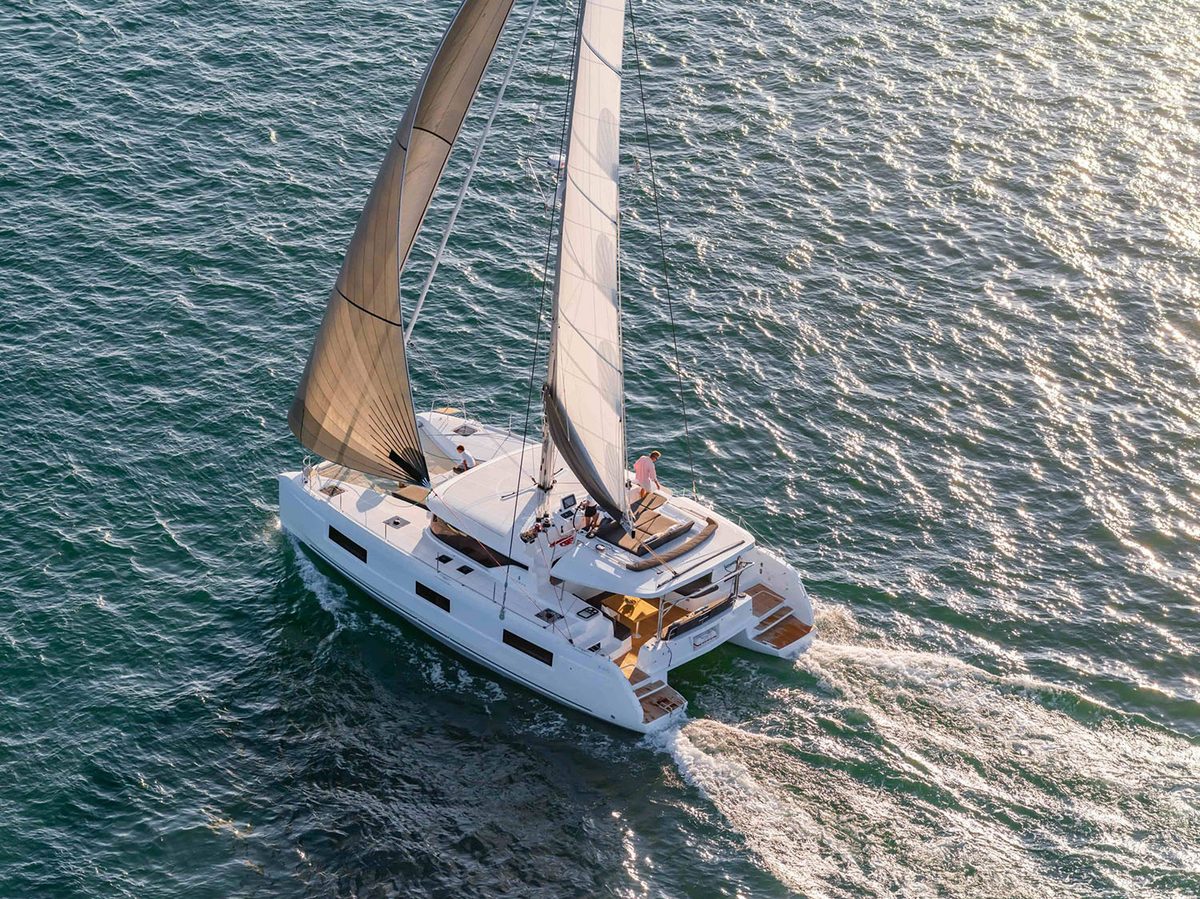
The fleet ranges from 2 to 12 passengers depending on the vessel. Catamarans and monohulls handle differently on the water; see our catamaran vs. monohull comparison to weigh which layout suits your group. The table below outlines two popular catamaran models.
| Vessel | Length | Cabins / Heads | Max Passengers |
|---|---|---|---|
| Lagoon Catamaran 42 | 42 ft | 3 cabins, 3 heads | 12 |
| Lagoon Catamaran 40 | 40 ft | 3 cabins, 2 heads, 3 showers | 12 |
Every boat has its own maximum capacity, set by Coast Guard certification. Catamarans offer wider layouts than other vessel types, providing a stable platform and spacious deck areas.
Day charters run 3, 4, 5, 6, 7, or 8 hours. A 3-hour harbor cruise differs significantly from a full-day or offshore Catalina trip in physical demands and rest requirements. Shorter charters let service animals and young children acclimate without extended exposure to sun, motion, or fatigue.
Longer voyages require additional planning for hydration, shade, and rest cycles. Families with service animals should consider starting with shorter harbor cruises before committing to extended offshore passages.
Discuss accessibility requirements with the charter team to identify vessels with appropriate deck layouts and interior configurations. Some yachts offer step-free access to cockpit areas, while catamaran designs typically provide wider walkways than narrower monohull sailboats.
Service-animal handlers may prefer vessels with shaded cockpit areas, easy water access, and minimal steps between levels. The charter team can describe boarding procedures and deck configurations for each yacht.
Respectful adherence to onboard protocols protects guest safety and preserves vessel condition for future charters. Following arrival times, capacity limits, and captain instructions shows consideration for the crew and fellow passengers.
Small courtesies, such as arriving on time, following safety guidance, and respecting equipment, let the captain focus on navigation and guest enjoyment.
Guests should arrive approximately 15 minutes before the scheduled charter time. Early arrival allows time for boarding and the captain's safety briefing without cutting into charter time or forcing a rushed boarding.
Punctuality shows respect for the captain's schedule and allows departure at the contracted time. Tidal windows, harbor traffic patterns, and weather conditions often influence departure timing.
U.S. recreational vessels must carry a Coast Guard-approved wearable PFD for each person onboard. Guests must provide accurate passenger counts during booking, since every person, including infants, counts toward the vessel's certified maximum.
Never exceed the stated passenger capacity, since overloading affects vessel stability and emergency response capability. Life jackets are provided for all ages, and children 12 and under must wear them continuously.
Chartering without a captain is not allowed; a licensed U.S. Coast Guard captain is aboard at all times. Every charter is led by a member of our Balboa Marina team, sailing Newport Harbor since 2006. Meet our captains to see the experience guiding every voyage.
The captain holds ultimate authority over vessel operation, safety decisions, and guest conduct during the charter. Guests should defer to the captain's instructions regarding movement, positioning, and activity restrictions. Fishing is not permitted on Newport Beach Sailing Charters & Yacht Rentals vessels, and the captain briefs guests on allowed activities, restricted areas, and emergency procedures before departure.
Newport Beach Sailing Charters & Yacht Rentals balances accessibility for service animals with safety requirements for every guest. Guests who communicate needs during booking, arrive prepared with the right supplies, and follow the captain's instructions enjoy a safe, memorable experience on Newport Harbor, and families traveling without pets benefit from advance care arrangements that keep the focus on the sailing adventure.
The quick reference below summarizes what is and is not allowed onboard.
| Item | Allowed Onboard | Notes |
|---|---|---|
| Service animals | Yes | ADA-qualified working dogs only; notify the team when booking |
| Ordinary pets | No | Dogs, cats, birds, and other companion animals are not permitted |
| Prepared food | Yes | Pack in sealed, spill-resistant containers |
| Alcohol | Yes | Red wine is discouraged due to staining risk |
| Balloons and confetti | No | Restricted for environmental and navigational reasons |
| Indoor decorations | Yes | Must be secured and kept clear of the captain's view |
Plan your day on the water with Newport Beach Sailing Charters & Yacht Rentals. Our team will help you choose the right vessel, answer your pet policy questions, and prepare a smooth, memorable charter for your whole group. Call (800) 609-3203 or contact us online to check availability and get a quote.
Only ADA-qualified service animals are permitted aboard Newport Beach Sailing Charters & Yacht Rentals vessels. Ordinary pets, including dogs kept as companions, cannot come along on the charter. If you plan to travel with a service animal, notify the charter team when you book so the crew can prepare the vessel and boarding process.
Under ADA Titles II and III, a service animal is a dog individually trained to perform a task related to a person's disability. Emotional-support and comfort-only animals do not meet this definition and are treated as pets under the charter policy. The charter team can answer specific questions about documentation or accommodation during booking.
Yes. Mentioning a service animal during booking lets the crew match your group to a suitable vessel layout and plan boarding, rest areas, and water access. Advance notice also gives the captain time to brief the group on movement zones and restricted areas before departure.
Guests may bring prepared food and beverages, including alcohol, aboard most charters. Red wine is discouraged because it can stain teak decks and upholstery. Day charters include the yacht, captain, safety gear, and cleanup, though food and beverages are not included in the charter price.
Vessel capacity depends on the boat, ranging from 2 to 12 passengers across the fleet. Every person aboard, including infants, counts toward the Coast Guard-certified maximum for that vessel. Provide an accurate headcount when booking so the crew can confirm capacity and prepare enough life jackets for the group.