

Charter sailboats combine functional living spaces with performance-oriented design to deliver memorable voyages. Interior layout, bathroom facilities, and onboard systems determine passenger comfort during multi-day trips. Understanding how different vessel types organize charter sailboat cabins and common amenities helps match expectations with reality.
Vessel categories range from compact monohulls to spacious catamarans, each offering distinct interior arrangements. Modern designs prioritize efficient space use while incorporating systems for extended cruising. Manufacturers balance weight distribution with livability to maintain handling characteristics.
Key Takeaways
Charter sailboats fall into four primary categories based on hull configuration and use. Catamarans dominate family bookings with 28% market share, while traditional monohulls serve experienced sailors seeking classic performance. Marine sanctuary vessels emphasize low-impact propulsion for wildlife observation, and performance boats prioritize speed over comfort.
Vessel selection depends on group size, experience, and trip objectives. Bareboat charters require certified skippers and self-sufficient navigation, while crewed options provide professional management. Charter sailboats represent 35% of the global yacht charter market, with catamarans capturing over 55% revenue share in cruising segments. The Lagoon 42 catamaran experienced 60% year-over-year booking increases, overtaking monohull popularity in 2025.
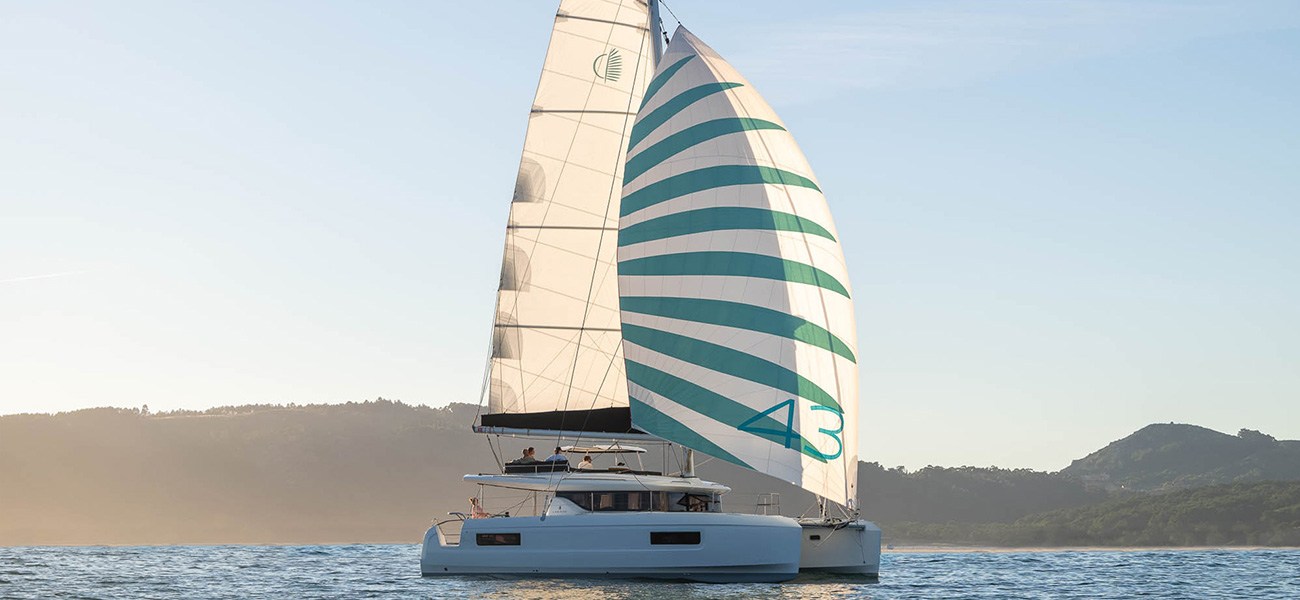
Catamarans feature dual parallel hulls delivering superior initial stability with minimal heeling during sailing. The twin-hull design eliminates the 15-25 degree tilt common in monohulls, reducing seasickness for inexperienced passengers. Catamarans maintain level decks in moderate wind, allowing safer movement between spaces. This stability advantage makes catamarans ideal for families and group charters in coastal waters.
Living space represents the most significant difference. Catamarans provide 30-40% more interior volume than comparable monohulls due to beam width. The saloon connects both hulls at deck level, creating expansive social areas with panoramic windows. A shallow draft allows access to secluded anchorages inaccessible to deep-keel monohulls.
High buoyancy from dual hulls makes catamarans extremely difficult to capsize in normal conditions. Each hull provides independent flotation, maintaining stability even if one side sustains damage. However, monohulls deliver superior upwind sailing performance through deeper keels and narrower beam designs.
Marine sanctuary sailing focuses on eco-tourism through wildlife observation and environmental education. These specialized vessels operate in protected areas with trained naturalists guiding passengers. The experience prioritizes minimal environmental impact using quiet propulsion and designated observation protocols.
Weather and seasonal patterns heavily influence sanctuary availability and wildlife encounters. Migration schedules determine optimal viewing windows for whales, dolphins, and seabirds. Regulatory restrictions limit vessel speed, approach distances, and passenger capacity to prevent habitat disruption.
Bio-diesel or electric-hybrid propulsion systems reduce noise pollution and emissions in marine sanctuaries. Solar panels supplement electrical systems, decreasing diesel generator reliance. These eco-friendly yacht charter options align with sustainable tourism demand, driving 16.26% annual growth in ecotourism markets. Vessels must meet certification standards for operating in designated conservation zones.
Performance sailing prioritizes speed and technological innovation for competitive sailors. These vessels feature lightweight construction and advanced aerodynamic designs optimized for racing. The segment appeals to adrenaline seekers willing to sacrifice comfort for acceleration.
Speed capabilities far exceed conventional charter sailboats. Lightweight carbon fiber hulls reduce displacement by 30-50% compared to fiberglass equivalents, increasing velocity potential. Highly responsive handling allows immediate reaction to wind shifts and tactical maneuvering. However, limited comfort amenities restrict extended cruising applications.
Performance sailing requires highly specialized skills to operate safely. The narrow performance envelope demands constant attention to sail trim, weight distribution, and course optimization. Most charter companies exclude performance boats due to liability concerns and certification requirements.
Charter sailboat cabins typically range from three to six berths, depending on vessel length and hull configuration. Monohulls organize cabins linearly along the centerline, while catamarans place sleeping quarters in each hull. Standard layouts include a forward owner's suite, mid-ship guest cabins, and aft cabins near the helm.
Head count directly correlates with cabin quantity, averaging 1.5 bathrooms per sleeping space on modern charters. Premium vessels provide ensuite facilities for each cabin, while budget options share communal heads. Manufacturers balance livable volume against performance characteristics.
Catamaran cabins occupy dedicated hull sections with independent access from the saloon deck. Each hull typically contains two cabins with ensuite heads, creating four private sleeping areas. Forward sections feature larger owner's suites with island berths and additional storage. This configuration provides superior privacy since physical separation between hulls eliminates shared walls.
Monohull layouts stack cabins vertically below the waterline along the vessel's longitudinal axis. The forward V-berth serves as the primary owner's cabin with the widest beam space. Guest cabins occupy mid-ship, where hull width maximizes headroom and berth dimensions. Aft cabins near the stern access the cockpit through dedicated companionways in larger vessels.
Modern sailboat heads incorporate marine toilets, separate shower stalls, and vanity areas in compact spaces. Electric marine toilets replaced manual pump models as standard equipment on charter vessels. Holding tanks store waste for shore-side pump-out, complying with environmental regulations. Hot water systems provide comfortable showering after swimming or sailing.
Premium heads include climate control systems, designer fixtures, and waterproof storage. Separate shower enclosures prevent water damage to surrounding cabin areas. Ventilation fans remove moisture and odors. Budget charters may feature wet heads where shower water drains throughout the bathroom floor.
Cabin positioning relative to common areas determines noise transfer and perceived privacy. Forward cabins experience anchor chain sounds and wave impacts in choppy conditions but offer distance from social spaces. Aft cabins near helm stations provide quick deck access but transmit engine vibrations and cockpit conversations. Mid-ship locations balance comfort with convenience.
Bulkhead construction materials significantly affect sound insulation between adjacent cabins. Solid composite panels provide better acoustic separation than fabric curtains or lightweight dividers. Door seals and gasket quality prevent light and sound leakage during sleeping hours.
Onboard facilities and yacht charter offerings directly influence passenger satisfaction and bookings. Standard amenities include full galleys with refrigeration, freshwater systems, and electrical power generation. Navigation electronics, safety equipment, and communications gear ensure operational security. Entertainment systems and climate control transform sailing into comfortable vacation experiences.
Amenity packages scale with vessel category and charter pricing. Consumer priority rankings show comfort and stability score 92% importance, surpassing speed considerations.
Full galley configurations include multi-burner stoves, ovens, refrigerators, and deep freezers on most charter sailboats. Counter space and storage accommodate meal preparation for crews of six to twelve. Microwave ovens and coffee makers appear as standard features on vessels built after 2020.
Climate control systems range from natural ventilation to reverse-cycle air conditioning. Hatches and ports provide passive airflow in temperate conditions. Air conditioning units require generator operation or shore power for continuous use. Heating systems become essential for shoulder-season charters in northern latitudes.
Budget catamarans priced between USD 4,500 and 6,000 weekly provide basic functionality without luxury upgrades. Standard equipment includes manual marine heads, passive ventilation, and simple galley appliances. Mid-range vessels at USD 6,000-12,000 weekly add air conditioning, electric toilets, and upgraded electronics.
Premium charters exceeding USD 15,000 weekly deliver resort-level amenities, including watermakers and ice makers. Watermakers convert seawater to potable water, eliminating tank capacity limitations. Underwater lighting, audio systems, and swim platforms enhance recreational activities. Crew services include provisioning, cooking, and daily housekeeping on fully-staffed luxury charters.
Solar panels on eco-tourism vessels supplement electrical systems while reducing diesel generator runtime. Panel arrays generate 400-800 watts on cruising catamarans, powering electronics and refrigeration during daylight. Battery banks store excess capacity for nighttime use without engine operation.
Electric and hybrid propulsion adoption grows at 11.99% annually across new charter fleet deliveries. Hybrid systems combine diesel engines with electric motors for quiet maneuvering in harbors and marine sanctuaries. Regenerative sailing mode converts propeller drag into battery charging during ocean passages.
Construction techniques determine structural strength, weight distribution, and durability of charter sailboats. Manufacturing processes range from traditional hand-laid fiberglass to advanced vacuum-bagged composites with engineered cores. Material selection balances cost against performance requirements.
Fiberglass represents 66.72% market share in catamaran construction due to proven durability and repair accessibility. Modern composite techniques allow precise control over laminate thickness and resin-to-fiber ratios. Quality construction reduces flex in hull panels under sailing loads.
Hand-laid composite construction remains common for production catamarans targeting charter fleets. Builders apply fiberglass cloth layers manually over molds, saturating material with polyester or vinylester resin. Multiple laminate schedules accommodate different structural zones requiring varied strength characteristics.
Vacuum-bagged composite construction uses vacuum pressure to remove air and excess resin from laminates. This method compresses layers tightly, creating stronger panels with optimal resin content and reduced weight. Foam or balsa cores sandwiched between fiberglass skins increase stiffness while minimizing material use. Vacuum-bagged composites produce lighter hulls with improved fuel efficiency and sailing performance.
Monohulls maintain self-righting capabilities through ballast keels and favorable center-of-gravity positioning. Deep lead or iron keels create a righting moment when vessels heel beyond 90 degrees. This design allows recovery from knockdowns in extreme weather without external assistance.
Catamaran stability depends on beam width and buoyancy distribution rather than weighted keels. The wide stance between hulls creates high initial stability but lacks self-righting characteristics once capsized. Modern designs incorporate reserve buoyancy in cabin structures to prevent complete inversion. Construction quality affects hull flexing under load, influencing passenger comfort and structural integrity.
Vacuum-bagged honeycomb cores in performance sailing construction maximize stiffness-to-weight ratios for competitive advantages. Honeycomb materials use hexagonal cell structures that resist compression while adding minimal mass. Builders sandwich these cores between carbon fiber skins, creating extremely rigid panels. This construction method appears in high-performance racing catamarans and offshore racing monohulls.
Carbon fiber and Kevlar materials reduce hull weight by 40-60% compared to fiberglass equivalents. Carbon fiber's exceptional tensile strength allows thinner laminates without compromising structural integrity. Kevlar provides impact resistance in high-load areas like bow sections and chain plates.
Safety features rank 78% priority in consumer charter selection criteria. Design elements like hull redundancy, stability characteristics, and emergency systems vary significantly between vessel types. Regulatory requirements mandate minimum safety equipment based on operational area and passenger capacity.
Vessel certification standards differ between bareboat and crewed charters based on crew qualifications. Commercial operations undergo more rigorous inspections than private recreational vessels. Equipment inventories must include life rafts, emergency beacons, fire suppression systems, and medical kits.
Catamaran designs provide inherent stability that prevents capsizing in normal sailing conditions. The dual-hull configuration distributes buoyancy across a wide platform, resisting rollover forces. However, inverted catamarans cannot self-right due to equal buoyancy on all surfaces.
Monohull self-righting capabilities provide critical safety advantages in severe weather and wave conditions. Weighted keels create a pendulum effect that returns vessels to upright positions after knockdowns. Deep-V hull shapes shed water quickly during recovery, reducing downflooding risks.
Professional crew experience directly correlates with safe navigation and emergency response effectiveness. Certified captains complete extensive training in seamanship, weather interpretation, and crisis management before commanding charter vessels. Bareboat operations transfer safety responsibility to charter clients, requiring demonstrated competency through licensing. Adding a professional skipper costs USD 250-350 daily but significantly reduces operational risks.
Crew familiarity with specific vessels improves system troubleshooting and damage control during emergencies. Regular operation builds an intuitive understanding of handling characteristics, equipment locations, and maintenance needs.
Life raft capacity matches or exceeds the maximum passenger certification on all commercial charter sailboats. Canister-stored rafts deploy within 60 seconds, providing emergency flotation if abandoning ship becomes necessary. Emergency Position Indicating Radio Beacons (EPIRBs) transmit distress signals with GPS coordinates to rescue coordination centers.
Fire suppression systems protect engine compartments and galley areas where ignition risks concentrate. Automatic extinguishers activate at preset temperatures, controlling fires before they threaten passenger safety. Handheld extinguishers are distributed throughout vessel interiors for manual firefighting. Smoke detectors and carbon monoxide alarms provide early warnings of developing hazards.
Charter pricing reflects vessel size, amenity levels, and seasonal demand across different categories. Budget monohulls start at USD 1,000 weekly, while premium crewed yachts exceed USD 50,000 during peak seasons. Geographic location significantly impacts rates, with Mediterranean and Caribbean destinations commanding the highest prices. Direct booking eliminates third-party commissions, reducing costs by 15-20%.
Accessibility varies between bareboat charters requiring sailing certifications and fully-crewed luxury experiences. Market data shows 72% of urban consumers prefer crewed options versus 28% of coastal residents choosing bareboat arrangements.
Budget catamarans range from USD 4,500 to 6,000 weekly during off-peak periods. Mid-range catamarans cost between USD 6,000 and 12,000 weekly, featuring upgraded amenities and newer construction dates. The Lagoon 42's popularity reflects an optimal balance between space, performance, and affordability. Premium crewed catamarans exceed USD 15,000 weekly with professional staff and luxury provisioning.
Budget monohulls offer entry-level accessibility at USD 1,000-2,500 weekly for vessels measuring 22-30 feet. Mid-range monohulls measuring 35-50 feet price between USD 3,500-6,500 weekly with standard charter equipment. Adding a professional skipper increases daily costs by USD 250-350.
Vessel length directly correlates with charter pricing due to increased operating costs and capacity. Each additional foot of length adds USD 100-200 to weekly rates. Charter fleets offering diverse vessel sizes provide options matching group dimensions and budget constraints.
Amenity packages distinguish pricing tiers within the same vessel category. Air conditioning systems add USD 500-1,500 weekly to charter rates due to generator fuel consumption. Watermakers, underwater lighting, and premium electronics further increase costs proportionally. Season timing affects availability, with winter peak season commanding 30-50% premiums over shoulder periods.
Bareboat charters operate without a professional crew, requiring charterers to possess documented sailing qualifications. Certification levels vary by jurisdiction but typically mandate coastal navigation experience and safety training. This option appeals to 28% of the market, primarily coastal residents with existing sailing backgrounds. Reduced labor costs make bareboat arrangements 40-60% cheaper than equivalent crewed options.
Crewed charters include a professional captain and potentially additional staff for cooking and housekeeping. The captain handles navigation, weather routing, and vessel systems while passengers enjoy recreational activities. This turnkey approach dominates urban consumer preferences, representing 72% of market demand. Charter sailboats offering both configurations capture broader customer segments.
Demographic analysis reveals distinct preferences driving vessel design and amenity selection. The 18-35 age bracket, representing 25% of market share, prioritizes social spaces and adventure opportunities. Families aged 36-50, comprising 42% of charter bookings, demand safety features and spacious layouts. Traditional sailors over 51 account for 56% of sailing club participation, favoring classic monohull performance.
Regional factors influence vessel availability and feature prioritization in different charter markets. Urban consumers, representing 72% of demand, prefer convenience-focused amenities like climate control and entertainment systems.
Younger demographics aged 18-35 favor catamarans for group charters, emphasizing social interaction and water sports. The expansive deck spaces and multiple cabin configurations accommodate friend groups seeking shared experiences. This segment drives demand for adventure packages combining sailing with snorkeling and island exploration.
Families aged 36-50 prioritize catamaran stability and safety features when selecting charter vessels. The minimal heeling characteristics prevent children's seasickness while providing secure deck movement. Multiple cabin configurations allow privacy for parents while keeping children nearby. This demographic represents the highest spending segment per charter booking.
Traditional sailors over 51 maintain a preference for monohull performance despite catamaran market dominance. This group values an authentic sailing feel and upwind efficiency over maximum living space. Smaller crew sizes reduce the need for multiple cabins, allowing focus on quality.
Winter 2025 recorded a 44% increase in charter bookings compared to the previous year. December through April represents peak season for Caribbean destinations, commanding premium pricing and advance reservations. Mediterranean season peaks during July and August when northern European clients seek warm-weather escapes. Shoulder seasons offer 30-50% discounts but face higher weather variability.
Turkey experienced 17% growth in booking rates during 2025, attracting price-conscious European charterers. Greece followed with 13% growth, benefiting from improved marina infrastructure. The Seychelles surged by 31% as an emerging destination for luxury eco-tourism charters combining sailing with wildlife observation.
Comfort and stability rank 92% priority score among charter customers surveyed. This overwhelming preference drives catamaran market dominance despite higher costs. Minimal heeling and spacious layouts address the primary concerns of inexperienced sailors and families.
Space and living quarters score 85% priority, reflecting a shift from performance to lifestyle-focused cruising. Modern charterers expect comfortable accommodations comparable to hotel standards. Multiple head facilities, climate control, and entertainment systems define minimum acceptable standards. Safety considerations rank 78% priority, with onboard amenities scoring 72% importance above speed and performance factors.
Interior integration determines how effectively charter sailboats balance functional requirements with passenger comfort. Thoughtful placement of charter sailboat cabins relative to heads and common areas creates logical traffic flow. Designers optimize vertical space in compact hulls while maintaining adequate headroom and ventilation.
Successful integration considers both active sailing conditions and stationary anchorage scenarios. Secure storage prevents items from shifting during heeling while remaining accessible during daily use. Electrical routing, plumbing layouts, and HVAC distribution require careful planning during construction.
Modern charter sailboats demonstrate remarkable evolution from utilitarian designs toward hospitality-focused floating accommodations. The industry successfully balances maritime performance requirements with resort-style comfort across price categories. Whether selecting a Newport Beach sailboat tour or an extended offshore passage, understanding cabin layouts, head amenities, and onboard facilities ensures optimal vessel selection. Newport Beach Sailing Charters provides diverse options matching every experience level and group configuration.
Reading about charter sailboat cabins and amenities is one thing. Stepping aboard a Lagoon catamaran in Newport Beach is something else entirely. Newport Beach Sailing Charters & Yacht Rentals offers private, fully crewed charters on spacious catamarans — twice as wide as a standard boat, with open deck areas, private cabins, and everything you need for a day sail or a multi-day escape to Catalina Island. No booking fees. No hidden costs. Just your crew, your itinerary, and open water ahead. Book directly with us and get our lowest rate guarantee. Ready to experience premium charter sailboat amenities firsthand? Contact our team to discuss custom itineraries and vessel selection for your next Southern California adventure.