

Key Takeaways
Booking the wrong size yacht is one of the most common mistakes first-time charter clients make. Too small and your group feels cramped. Too large and you're paying for space nobody uses. This charter size guide for Newport Beach breaks down exactly how many people fit on a yacht in Newport, what regulations apply, and how to match vessel size to your group. Whether you're planning a couple's getaway or a 50-person corporate event, understanding yacht capacity in Newport Beach starts with knowing a few key numbers.
The size of a yacht charter in Newport directly affects safety, comfort, and cost. Coast Guard rules set hard limits on how many passengers a vessel can carry. Beyond legality, the right fit means everyone has room to move, relax, and enjoy the water without feeling crowded or overpaying for unused deck space.
Federal regulations dictate every charter's passenger ceiling. The U.S. Coast Guard divides charter vessels into two main categories. Uninspected Passenger Vessels under 100 Gross Regulatory Tons fall under the "6-pack" rule — a maximum of six paying passengers per trip. The captain and legitimate crew do not count toward that number. Larger uninspected vessels over 100 GRT qualify under the "12-pack" rule, allowing up to 12 passengers without additional inspection.
Carrying more than 12 passengers requires a Certificate of Inspection from the USCG. This is a rigorous, expensive certification process that most recreational charter yachts don't pursue. That means the vast majority of private charters in Newport Beach will accommodate either 6 or 12 guests as a legal maximum. Overnight capacity is even more restrictive — generally capped at 12 guests regardless of the vessel's day-charter rating. When evaluating yacht capacity in Newport Beach, always confirm whether your chosen vessel operates under the 6-pack or 12-pack rule before booking.
Length gets all the attention, but Gross Tonnage is a better indicator of how a yacht actually feels. GT measures a vessel's total enclosed volume in cubic meters — every cabin, saloon, galley, and storage area combined. Two yachts at the same length can have dramatically different GTs. A higher GT translates to more spacious interiors, wider walkways, and better-appointed common areas.
This matters when you're choosing the optimal yacht size for a family in Newport or planning a group outing. Industry experts recommend booking a yacht with a rated capacity 10–15% above your actual headcount. For a group of 10, that means targeting a vessel rated for 12. The extra breathing room keeps guests comfortable, especially on longer charters where people want to spread out between the deck, saloon, and bow areas.
Going too small creates problems fast. Exceeding USCG capacity limits puts your charter at legal risk and can result in the trip being canceled at the dock. Even within legal limits, a packed boat means tight seating, limited movement, and a less enjoyable experience for everyone on board.
Going too large wastes money. A $1,800 base charter with tax and gratuity comes to roughly $2,464. Split among 10 guests, that's about $246 per person. Now put that same group on a mega yacht priced at $9,000+, and the math stops making sense. Choose a smaller yacht in the 30–40 ft range if your group is 6 or fewer and you want a more intimate, budget-friendly outing. Choose a larger yacht at 60 ft or above when your group exceeds 12, or you need separate areas for socializing, lounging, and entertainment.
Matching yacht size to group size is straightforward once you know the capacity tiers. Newport Beach charters range from compact Duffy boats for a handful of guests to Coast Guard–certified mega yachts built for 80. The right choice depends on your headcount, the type of event, and how much space each guest needs to stay comfortable.
Day charter capacity scales predictably with vessel length. Yachts in the 30–40 ft range handle 6–12 guests. The 41–60 ft class carries a similar range but with more deck and interior space. Once you cross into the 61–80 ft category, capacity jumps significantly — a 61' Chris Craft, for example, accommodates up to 35 passengers on a day charter.
Larger vessels push the ceiling higher. An 85 ft Pacifica Yacht holds up to 70 passengers plus crew and captain. Coast Guard–certified vessels at 100 ft and above can carry up to 80 guests. As a quick rule of thumb for how many people fit on a yacht in Newport: under 60 ft seats 12 or fewer, 60–80 ft serves mid-size groups up to 35, and anything over 80 ft handles large-scale events.
The event you're planning shapes the vessel you need just as much as headcount does. Intimate weddings work well on yachts rated for up to 12 guests, keeping the atmosphere personal and elegant. Larger celebrations need 65–85 ft vessels that accommodate 70–80 guests with dedicated areas for the ceremony, reception, and entertainment.
Corporate events follow a similar pattern. A team-building outing for 12–20 people fits comfortably on a mid-size motor yacht. Company-wide gatherings or client events pushing 40–80 guests require large inspected vessels — many Newport Beach charter companies offer customizable corporate packages for this exact scenario. For birthday parties and family reunions, a Duffy boat or small motor yacht handles groups of 12 or fewer at a fraction of the cost. When the guest list grows to 12–30, step up to a mid-size motor yacht or catamaran for the extra room.
Choose a Duffy or small motor yacht if you have 12 guests or fewer and want a casual, budget-friendly day on the harbor. Choose a premium or mega yacht when you're hosting a formal event, wedding, or large corporate event. Knowing the optimal yacht size for a family in Newport or a large corporate group comes down to matching the event's needs to the vessel's layout — not just its length.
This charter size guide for Newport Beach breaks down the five most common group configurations and the vessel sizes that serve them best.
Intimate couples (2–4 guests) do well on 30–40 ft yachts where the focus is luxury and privacy. A dedicated captain handles navigation while guests enjoy an uninterrupted experience. Small groups of 6–8 fit the classic 6-pack charter on vessels ranging from 30–60 ft — enough room for comfortable seating, a small saloon, and open deck space.
Medium groups of 10–15 typically need yachts in the 60–80 ft range. These vessels may operate as larger uninspected vessels or require Coast Guard inspection, depending on the exact passenger count. Large parties of 20–30+ require inspected vessels, generally 60–100 ft or more, with multiple socializing zones and ample deck space. Corporate events with 40+ guests call for the biggest class — 80 ft and above — featuring expansive open decks, large saloons, and professional-grade audio and visual systems designed for presentations and entertainment.
Newport Beach holds the largest and most diverse charter fleet in Orange County. The harbor supports everything from self-captained electric boats to fully crewed mega yachts, giving groups of any size access to the right vessel for their plans. Understanding the differences between yacht types helps narrow the field before you ever contact a charter company.
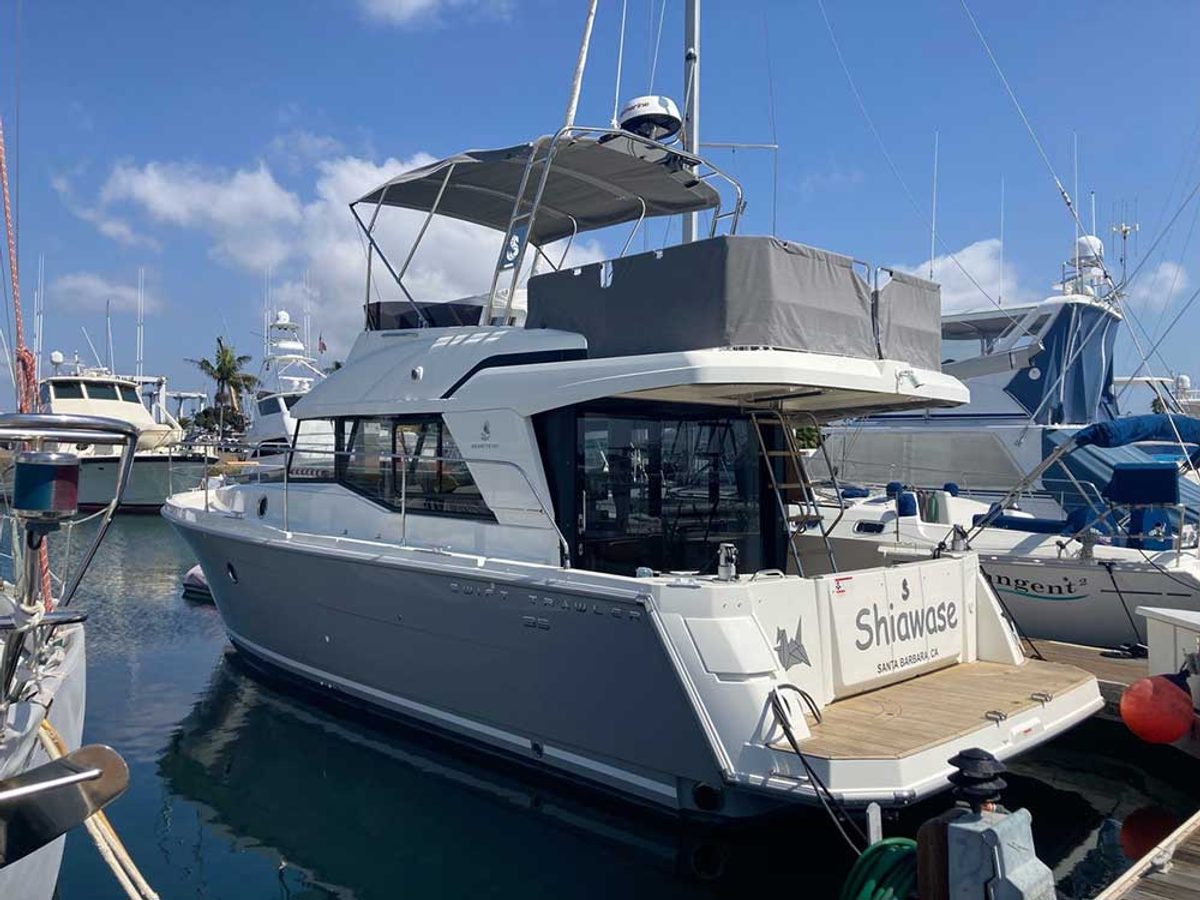
Motor yachts make up the core of the Newport Beach fleet. Entry-level models start at 30–40 ft and scale up to mega yachts over 100 ft. Companies like Newport Coast Marine operate new-model luxury vessels, including Ferretti 670, several Sunseeker models (68 Manhattan, 65 Sport Yacht, 55 Superhawk), and Prestige models (X60, 590, 520). These are fully crewed, climate-controlled, and designed for both harbor cruising and open-ocean trips.
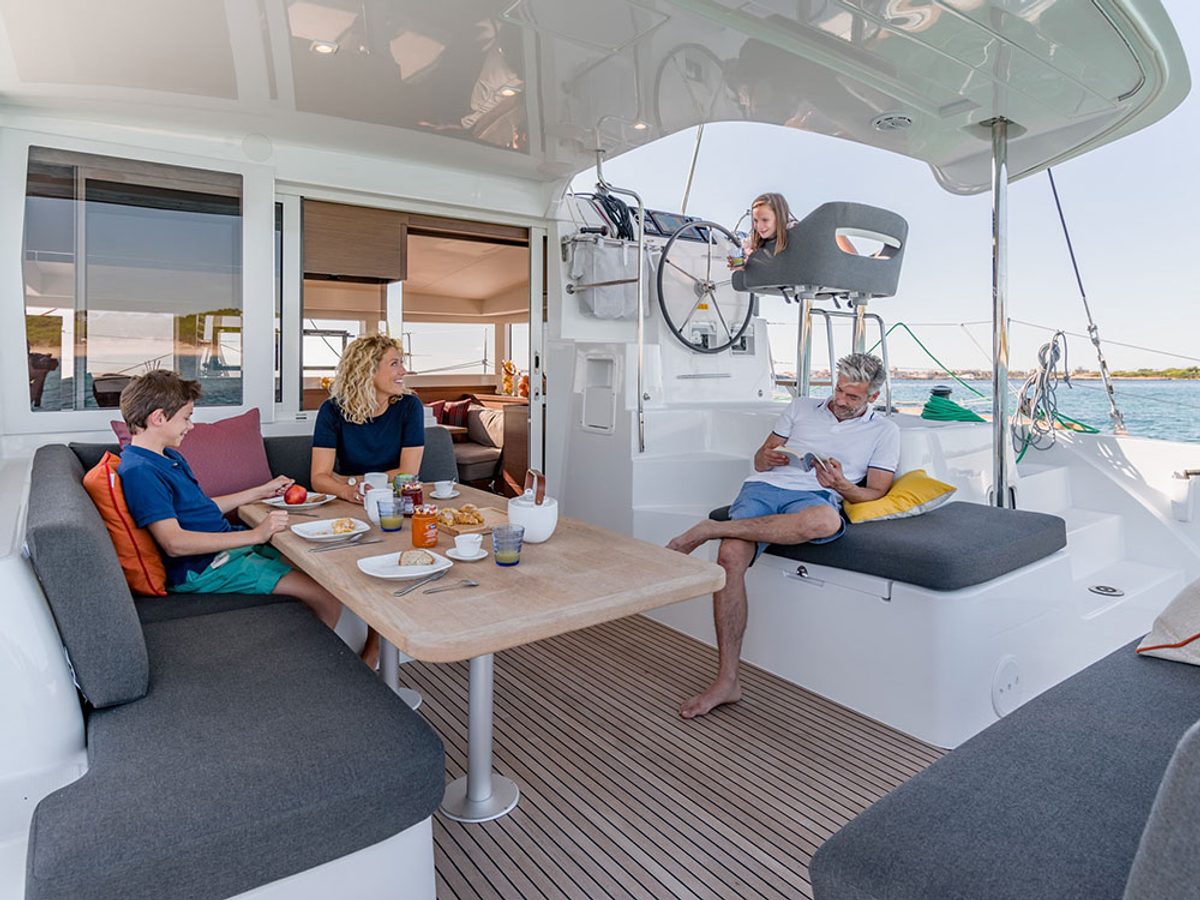
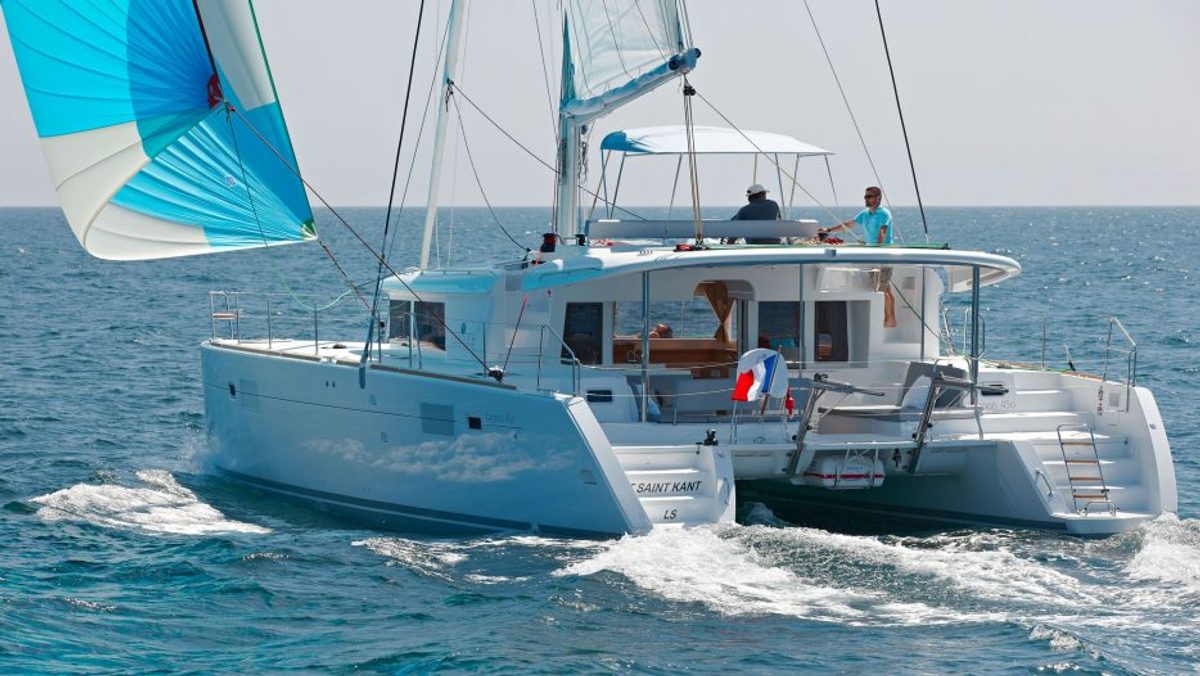
Sailboats and catamarans range from 35–60 ft. Catamarans are especially popular with mid-size groups of 15–20 because their wider beam provides more usable deck space and better stability than a monohull of the same length. Duffy electric boats round out the fleet at 16–22 ft. They're self-captained, allow BYO food and beverages, and are ideal for casual harbor cruising without the cost of a crewed charter. No matter the size of yacht charter in Newport you're considering, there's a vessel class built for it.
Motor yachts operate independently of wind, making them the most predictable option for comfort. They perform best in calm to moderate seas with winds under 15 knots. Because they rely on engines rather than sails, motor yachts maintain steady speeds and stable decks — a clear advantage for guests who are new to the water or prone to motion sensitivity.
Sailboats thrive in different conditions. Winds of 5–15 knots, common during mornings and the winter months, create beginner-friendly sailing. Experienced sailors prefer the 15–25 knot afternoon breezes that pick up during summer. Newport Beach enjoys a Mediterranean climate year-round, with summer highs of 77–78°F and water temperatures around 67.8°F. Winter stays mild at 66–67°F with water temps near 58°F. Reliable summer sea breezes of 10–20 knots make the harbor one of Southern California's best sailing environments. When evaluating yacht capacity in Newport Beach, keep in mind that a sailboat's usable guest space is smaller than a motor yacht of the same length due to rigging, boom clearance, and heel angle under sail.
The activity you're planning determines the hull beneath your feet. Whale watching charters run nearly year-round from Newport Beach. Gray whales pass through from mid-December through mid-March during their southbound migration. Blue whales — the largest animals on Earth — appear from April through November, with peak sightings in July and August. Humpback whales are present from late March through early December. Motor yachts handle these trips best because they can reposition quickly when pods are spotted.
Coastal cruising is another popular option. The route from Newport Beach to Laguna Beach covers roughly 9–10 nautical miles, taking 20–30 minutes by motor yacht or 1–2.5 hours by sailboat. Scenic highlights along the way include Crystal Cove State Park, Corona del Mar, Crescent Bay, and Shaw's Cove. For luxury outings and large parties, motor yachts in the 60–100 ft range provide multiple entertainment zones, premium sound systems, and enough deck space to keep guests comfortable across a full-day charter.
Choose a sailboat or catamaran if your goal is a relaxed day on the water with a moderate group of 6–20, and you enjoy the experience of wind-powered cruising. Choose a motor yacht if you want speed, stability, and access to open-ocean destinations like Catalina Island, which sits just 26 miles from Newport Beach.
Amenities scale directly with yacht size. A 35 ft vessel and an 85 ft vessel deliver fundamentally different experiences, even if the guest count is similar. Knowing what comes standard at each size tier helps you set realistic expectations and avoid paying for features you don't need — or missing ones you do.
Smaller yachts in the 30–60 ft range cover the basics: comfortable seating, a small galley, a head, and a basic sound system. Water toys at this level are typically limited to snorkeling gear or paddleboards. These vessels work well for groups that plan to spend most of their time on deck enjoying the views rather than moving between multiple areas.
Medium yachts from 60–80 ft add meaningful upgrades. Galleys are more functional, multiple heads reduce wait times, and saloon areas offer real room to spread out. Entertainment systems improve noticeably at this tier. Water toys expand to include kayaks, larger paddleboards, and occasionally inflatable rafts. Air conditioning and onboard generators become standard — a significant comfort factor on warm summer charters. Yachts at 80 ft and above enter a different category entirely. Expect multiple staterooms with en-suite bathrooms, formal dining areas, expansive flybridges, hot tubs, state-of-the-art audio and visual systems, and stabilizers that reduce motion at sea. Water toy selections widen to jet skis, tenders, and sea bobs. Dedicated crew quarters keep service staff separate from guest areas. When thinking through yacht capacity in Newport Beach, remember that amenities consume usable space — a yacht packed with premium features may carry fewer guests than a stripped-down vessel of the same length.
Water toys are a deciding factor for groups that want more than a scenic cruise. Smaller yachts can stow a paddleboard or two, but anything beyond that requires a vessel with dedicated storage and a swim platform or tender for deployment. The 85-foot Pacifica Yacht is a good benchmark for what a fully equipped charter looks like. It features a large main salon, covered pilot house and sky lounge, open-air upper deck, spacious bow for entertaining and sunbathing, three staterooms, five heads, a fully stocked bar, surround sound system, and water toys including a floating lily pad. It cruises at 12 knots.
If water activities are a priority, keep in mind that approximately 12 miles of Orange County coastline are designated Marine Protected Areas. Transit and anchoring are permitted within these zones, but specific regulations apply within the Crystal Cove State Marine Conservation Area. Your captain will know which areas are open for recreational water use and which require extra caution.
Crew members don't count toward passenger limits, but they do occupy physical space on the vessel. On a 6-pack charter carrying up to 6 passengers, the minimum requirement is one licensed captain. Additional crew — a mate or deckhand — can come aboard without reducing your guest count, provided they serve a legitimate operational role.
Charters carrying up to 12 passengers under the 12-pack rule typically add a mate for safety and guest services. Once you step into inspected vessels rated for more than 12 passengers, crew requirements are mandated by the USCG as part of the Certificate of Inspection. Superyachts at 80 ft and above carry professional crews ranging from 3 to over 50 members, depending on the vessel's size and onboard amenities. Crew roles on larger charters extend well beyond navigation — expect dedicated hospitality staff and watersports support to keep the experience seamless from boarding to disembarkation. The size of the yacht charter in Newport you select should account for crew presence, especially on mid-size vessels where every square foot of deck and cabin space counts.
Price and size move in lockstep. A Duffy boat for a few hours costs less than a restaurant dinner, while a mega yacht for a half-day runs into five figures. Knowing the pricing tiers, the hidden fees that sit outside the base rate, and the timing strategies that stretch your budget helps you get the most out of every dollar spent on the water.
Newport Beach charters are priced per yacht, not per guest. The base rate typically includes the vessel, a licensed captain, and fuel for harbor cruising. From there, cost scales with size and duration. Duffy electric boats (16–22 ft) start at $299–$795 for a 3–4 hour self-captained cruise carrying 6–12 guests. Entry-level motor yachts in the 30–40 ft range run $800–$1,200 for a 4-hour charter with similar capacity.
Mid-tier options are split into two tracks. Sailboats and catamarans (35–60 ft) range from $1,850–$4,300 for 4–6 hours and can accommodate 6–49 guests depending on the vessel. Mid-size motor yachts (40–55 ft) fall between $1,500–$2,400 for the same duration with 12–20 guest capacity. Premium motor yachts at 60–80 ft jump to $3,300–$6,000 for 4–8 hours, handling 12–30 guests. At the top of the market, mega yachts over 100 ft command $9,157–$14,000 for a half-day and seat 30–50 guests. This charter size guide for Newport Beach makes one thing clear: the per-person cost often drops as yacht size increases, because larger groups split a higher base rate across more people.
The base rate is never the final number. Crew gratuity is standard at 15–20% of the charter fee. Fuel surcharges add $300–$500 for coastal trips and $600–$800 if you're heading to Catalina Island. California sales tax applies at 7.75% on the base fee. A damage waiver typically runs $25–$35 per day or 4–8% of the total cost.
Multi-day charters introduce an additional line item called the Advance Provisioning Allowance, or APA. This covers fuel, provisions, and docking fees at 30–35% of the base charter fee. On a $6,000 premium motor yacht charter, for example, the APA alone adds $1,800–$2,100 before anything else. Factor these extras into your budget early, so the final invoice doesn't come as a surprise. Asking your charter company for a fully itemized estimate before booking is the simplest way to keep costs transparent.
Timing is the single biggest lever you can pull. Weekday charters save up to 40% compared to weekend bookings. Peak season — June through August and December — carries a 30–60% premium over off-peak rates. Holiday charters around Christmas and New Year add another 10–20% on top of that.
October stands out as the best value month for chartering in Newport Beach. Rates drop 25–40% below peak pricing while the weather stays excellent: average highs of 74°F, water temperatures around 64.6°F, and only 0.7 inches of precipitation for the entire month. Sunsets land around 6:15 PM, still late enough for an afternoon-into-evening cruise. Early booking is another reliable savings tool. Discounts of 5–15% off base charter fees are common when you reserve well ahead of your date, and the most desirable yachts can fill up 12 or more months in advance during peak season.
Choose a weekday charter in October or the shoulder season if budget is your priority. Choose a peak-season weekend if the event date is fixed and you want guaranteed warm weather with daylight stretching past 8:00 PM. Either way, how many people fit on a yacht in Newport determines your per-person cost — filling a vessel closer to its rated capacity is the most efficient way to get premium time on the water without overspending.
The right yacht comes down to three things: your headcount, your event type, and your budget. Match those to the capacity tiers and pricing ranges in this guide, and you'll book with confidence every time. At Newport Beach Sailing, we help groups of every size find the ideal vessel — whether it's a Duffy for six or a mega yacht for fifty. Our team knows this harbor inside and out and can walk you through every option. Contact us today to start planning your charter. We'll make sure the fit is exactly right.