

Key Takeaways
Seasickness ruins more charters than bad weather. It starts fast, escalates quickly, and affects up to 80% of the population under the right conditions. The good news is that nearly every case is preventable with the right preparation. This guide covers practical seasickness prevention yacht Newport crews recommend, the fastest ways to manage motion sickness charter guests experience mid-trip, and proven smooth sailing tips Newport Beach locals rely on year-round. Whether you're a first-timer or a seasoned host planning a corporate outing or family cruise, these strategies keep everyone comfortable from dock to dock. Read on for the exact steps to take before, during, and after boarding.
Seasickness is a form of motion sickness. It happens when your brain receives conflicting signals from your eyes, inner ear, and body. It is not a sign of weakness, and it is not inevitable. Understanding the mechanics helps you prevent it.
Seasickness starts with a sensory mismatch. Your inner ear (the vestibular system) detects the boat's movement. But if you're inside a cabin looking at a stable wall, your eyes report no movement at all. Your brain can't reconcile the two signals, so it triggers stress-related hormones that cause nausea, vomiting, dizziness, and vertigo.
Some people react faster than others. Women—especially during pregnancy or menstruation—and children ages 2 to 12 are more susceptible. People with existing conditions like vertigo, Meniere's disease, or chronic migraines also face higher risk. If you fall into any of these groups, plan ahead. The right preparation makes all the difference.
The first signs are subtle: yawning, pale skin, cold sweats, and a vague unease in the stomach. These can appear within minutes of leaving the dock. Left unaddressed, they progress to full nausea, dizziness, and vomiting. About 80% of the general population is susceptible to motion sickness in some form. On the water specifically, seasickness prevalence ranges from 3% to 60% depending on sea conditions, vessel type, and individual sensitivity. The key is acting at the first hint of discomfort—not waiting until symptoms become severe.
Seasickness is not a certainty for new boaters. Motion sickness medications work best when taken before exposure to motion, not after symptoms start. That single timing detail prevents most cases. Long-term, habituation—repeated exposure to motion—is the most effective countermeasure available, surpassing every medication in efficacy with zero side effects. Military habituation programs have demonstrated over 85% success rates. For your first charter, the right medication taken at the right time is usually all you need.
Prevention starts well before you step on the dock. What you eat, drink, and take in the 24 hours before departure determines most of your comfort on the water. The best charter health advice Newport providers give is simple: prepare the night before, not the morning of.
Get a full night's sleep the day before your charter. Eat a balanced dinner and avoid heavy, greasy, or spicy food. Skip alcohol entirely—it dehydrates you and irritates your stomach, both of which amplify seasickness. The morning of, eat a light, bland meal at least 30 minutes before boarding. Toast, crackers, bananas, or plain oatmeal all work well. Stay hydrated with water throughout the morning. An empty stomach is just as risky as a full one. You want something mild to settle against.
Two over-the-counter H1 antihistamines dominate the market. Dimenhydrinate (Dramamine) kicks in within 30 to 60 minutes, lasts 4 to 8 hours, and requires re-dosing every 4 to 6 hours. Meclizine (Bonine) takes about an hour to work but lasts 8 to 24 hours on a single daily dose—making it the more practical choice for most charters. Both carry side effects: drowsiness, dry mouth, and blurred vision. Effectiveness rates sit at 85% for Dramamine and 82% for Bonine. Choose Bonine if you want once-daily dosing with less drowsiness. Choose Dramamine if you need faster onset and plan a short trip.
For longer trips or higher sensitivity, ask your doctor about scopolamine (Transderm Scop). This prescription patch is applied behind the ear 4 to 6 hours before travel, lasts up to 72 hours, and carries a 95% effectiveness rate. It is slightly less sedating than the OTC options. However, scopolamine is contraindicated for people with glaucoma or a risk of prostatic urinary retention. Choose scopolamine if you have high sensitivity or are booking a full-day or multi-day charter. Whichever option you choose, test it in a safe setting before your trip day to check for side effects.
If you prefer to skip medication, several non-pharmacological options exist. Ginger—in supplement, tea, or candy form—is the most popular natural remedy. It may reduce nausea, though scientific evidence is mixed. Its effectiveness sits around 65%. Acupressure wristbands (Sea-Bands) apply pressure to the P6 point on the inner wrist. Research suggests they perform close to placebo, but many users report real relief—effectiveness is roughly 55%. Deep breathing exercises offer about half the efficacy of medication with zero side effects. Choose ginger if you want the strongest non-drug option. Choose acupressure bands if you prefer a wearable, hands-free solution. These are among the most accessible sea sickness remedies boat trip veterans use when they want to stay pill-free.
A simple prevention kit keeps your options open once aboard. Include your chosen medication or ginger capsules, acupressure wristbands, ginger chews or candies, peppermint mints, a refillable water bottle, plain crackers, and sunglasses. The sunglasses reduce visual stimulation that can worsen sensory conflict. Keep everything in a small bag you can access quickly on deck. The goal is to avoid strong odors, stay nourished with easily digestible snacks, and have remedies within arm's reach before symptoms ever start.
Route, timing, and vessel choice dramatically affect how much motion you feel. A few smart booking decisions can cut seasickness risk in half before you even step aboard.
Wind and chop build through the afternoon. Early morning trips—departing between 8 and 9 a.m.—consistently offer the flattest water. Choose a 2- to 3-hour private charter if your group includes anyone with motion sensitivity. It's long enough to enjoy the experience but short enough to avoid deteriorating conditions. Choose a half-day event of 4 to 5 hours if your entire group has sailing experience and strong stomachs. When in doubt, go shorter—you can always book again.
Newport Harbor is one of the smoothest cruising environments in Southern California. The harbor itself, the areas around Balboa Island, and routes hugging the coastline keep you in protected water with minimal swell. Choose a harbor-focused route if comfort is the priority for your group. Choose a coastal route toward open water if your guests are experienced and want a more adventurous ride. Newport Beach serves as a departure point with diverse route options—your captain can adjust the itinerary based on real-time conditions.
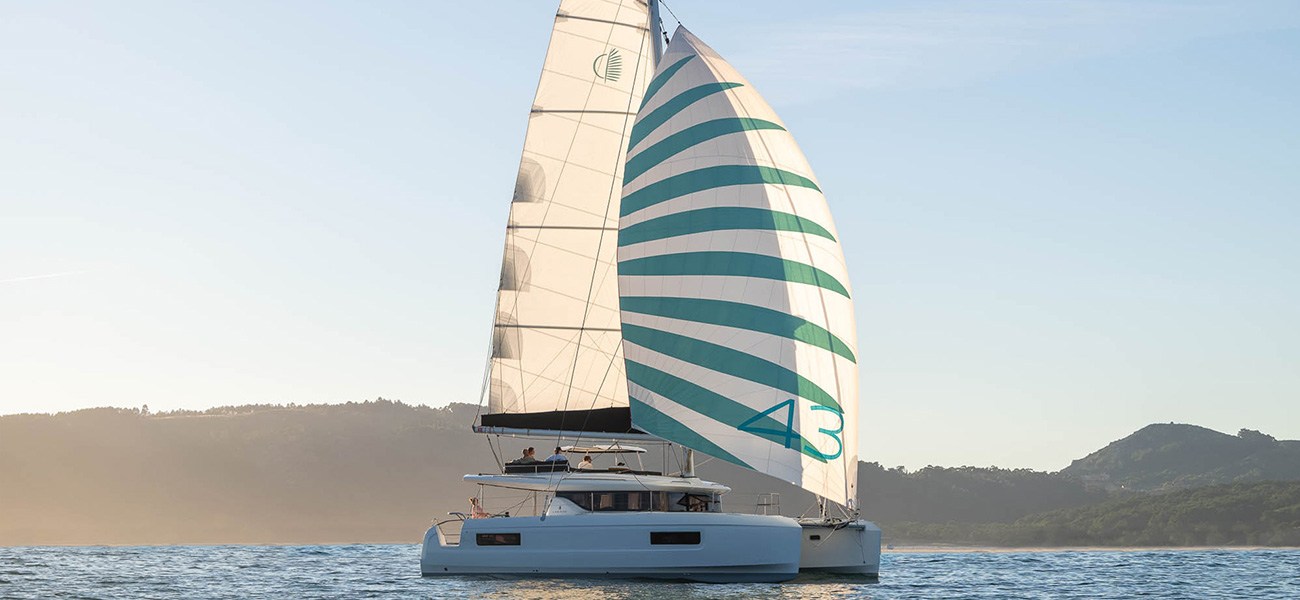
Vessel size is the single biggest factor in ride quality. Larger boats ride over multiple wave fronts, smoothing out the ocean's motion. The data backs this up clearly. A large catamaran scores 95% on stability with only an 8% seasickness rate among passengers. A large monohull sits at 75% stability and a 25% seasickness rate. Small monohulls drop to 60% stability, with seasickness affecting up to 35% of guests.
Catamarans generally offer less heeling and rolling than monohulls, though some people describe their motion as more of a lateral "washing machine" feel with unpredictable yawing. The experience is subjective. Choose a large catamaran if your group includes first-timers or motion-sensitive guests. Choose a monohull if your group is experienced and prefers a traditional sailing feel. Regardless of hull type, where you sit matters. Positioning midship—the center of the boat—reduces felt motion significantly, with a 75% effectiveness rate as a standalone measure. When booking, ask about hull type and vessel size. If seasickness is a concern for your group, the larger vessel is worth the investment.
Knowing the theory is one thing. Executing it on charter day is another. These are the specific, step-by-step actions tied to a Newport Beach departure that keep guests comfortable from prep to docking.
Start the night before. Get a full night of rest—fatigue significantly increases susceptibility. Avoid alcohol and heavy or greasy meals entirely. If you're using a scopolamine patch, apply it at least 12 hours before departure to give it a wide safety margin beyond the minimum 4- to 6-hour activation window. Eat a light breakfast the morning of. One logistical note: all passengers must complete a Coast Guard manifest before boarding, so arrive a few minutes early to handle paperwork without rushing.
The middle of the yacht experiences the least vertical motion. The bow pitches, the stern sways, but midship stays relatively steady. Stay on the main deck where you can see the horizon and breathe fresh air. That visual reference is critical—it helps your brain reconcile the motion your inner ear is detecting. Keep your head movements slow and deliberate. Quick turns or looking up and down repeatedly can trigger symptoms in susceptible passengers. Avoid sitting inside enclosed cabins for extended periods.
If you start feeling slightly off—a vague queasiness, extra yawning, light sweating—act immediately. Move to open air. Put the phone away. Reading and screens force your eyes to lock on a fixed point while your body moves, which accelerates the sensory conflict. Face into the breeze and focus your gaze on the horizon or a fixed point on shore. One often-overlooked tip: move away from other guests who are already feeling sick. Seasickness has a psychological contagion effect—watching someone else struggle makes your own symptoms worse.
Don't wait to speak up. An experienced Newport Beach captain can make real-time adjustments that dramatically improve comfort. Slowing the vessel reduces bow impact. Turning into swells rather than taking them broadside smooths the ride. If conditions deteriorate, the captain can relocate to the protected waters of Newport Harbor or tuck behind the leeward coastline. Crew members are also trained to offer guidance and may carry additional remedies onboard. Communication between guests and crew is the fastest fix available.
Even with solid preparation, it can happen. Quick response is everything. Most cases stabilize within 10 to 15 minutes with the right intervention.
Get the person outside immediately. Position them at the center of the boat where motion is lowest. Have them face the wind and fix their gaze on the horizon. Offer small sips of cold water. Ginger chews and acupressure bands can still help even after symptoms start. Most guests stabilize quickly once they're in fresh air with a clear visual reference. Apply a cold, damp cloth to the back of the neck for additional relief. Keep them talking—distraction helps.
Going below deck is the single worst response to seasickness. Enclosed spaces remove the horizon reference and trap stale air, amplifying the sensory mismatch that caused the problem. Screens and reading accelerate nausea. Strong odors and heavy food trigger vomiting faster. Keep them away from other guests who are also feeling sick—seasickness spreads psychologically. The instinct to retreat to a quiet cabin feels logical but does the opposite of what the brain needs to recalibrate.
Standard seasickness is unpleasant but resolves quickly once back on stable land. However, monitor children closely—susceptibility peaks between ages 7 and 12, and they may not communicate symptoms clearly. If any guest shows signs of severe dehydration, disorientation, chest tightness, or fainting, return to the marina. Your captain knows the fastest route. These situations are rare, but they warrant immediate action over continuing the trip. When in doubt, head in. No event or itinerary is worth a medical emergency at sea.
Bad advice sinks more stomachs than rough seas. These three myths persist because they sound logical. Each one makes seasickness worse.
Every source in the research is consistent on this point: strictly avoid alcohol before and during a charter. Alcohol dehydrates the body, disrupts inner ear balance, and irritates the stomach lining. A drink to "settle the nerves" before boarding does the exact opposite. Even one or two drinks the night before can increase your sensitivity the next morning. Save it for after you dock. Choose water, ginger ale, or electrolyte drinks if you want something in hand while aboard.
This one is not a myth—it's confirmed. When you read or scroll on a boat, your eyes lock onto a stationary point while your vestibular system detects constant movement. That mismatch overwhelms the brain and fast-tracks nausea. If you need your phone briefly, use it on the open deck and glance up at the horizon every few seconds. Choose audiobooks or music over reading if you want entertainment. Anything that keeps your eyes free to track the horizon is a safer option.
The instinct to lie down in a dark, quiet room works for headaches. It backfires for seasickness. Going below deck removes your visual horizon reference and traps stale air—both of which amplify symptoms. Fresh air, natural light, and a clear sightline to the horizon are your three strongest tools. Choose the open deck over any indoor space, every time. If someone needs to rest, have them recline on the open deck facing the breeze rather than retreating to a cabin.
Group charters require extra planning. One sick guest changes the energy for everyone. A short prep checklist prevents most problems before they start.
Communication is the cheapest prevention tool you have. Send guests a brief email 48 hours before departure covering: take Bonine or Dramamine 30 to 60 minutes before boarding, eat a light breakfast, bring sunglasses and a light jacket, skip alcohol the night before, and wear flat-soled shoes. Roughly 75% of employees rate team-building activities positively when they're well-organized—and preparation is the difference. Normalizing the prep removes stigma. It also reduces anxiety, which directly increases motion sickness susceptibility.
Catering is not provided onboard, so coordinate with your group to bring appropriate provisions. Stick to light, bland options: crackers, pretzels, fruit, and granola bars. Pack plenty of bottled water and ginger ale. Avoid anything with strong smells or heavy sauces. Schedule a morning departure when the seas are calmest. For mixed groups with varying sensitivity levels, keep the cruise to 2 to 3 hours. This combination of timing, smart provisions, and modest duration handles most comfort concerns.
Idle guests sitting inside get sick. Active guests on the open deck don't. Keep people standing, socializing, and looking outward. If the captain allows it, let guests take turns at the helm—steering gives the brain a sense of control that directly counteracts motion sickness. Reinforce the basics throughout: stay hydrated, watch the horizon, minimize head movements, and keep phones in pockets. A little structure from start to finish keeps the whole group steady and the energy positive throughout the charter.
Seasickness is preventable. The right medication timing, a light meal, a morning departure, and a spot midship on the open deck handle the vast majority of cases. The rest comes down to choosing the right vessel and working with a crew that knows these waters.
At Newport Beach Sailing, we help guests and groups plan comfortable, memorable charters every week. Whether you're booking a corporate outing, a family cruise, or your very first time on the water, we'll match you with the right boat, route, and schedule for a smooth experience. Reach out to us today to start planning your next trip.Key Takeaways
Seasickness ruins more charters than bad weather. It starts fast, escalates quickly, and affects up to 80% of the population under the right conditions. The good news is that nearly every case is preventable with the right preparation. This guide covers practical seasickness prevention yacht Newport crews recommend, the fastest ways to manage motion sickness charter guests experience mid-trip, and proven smooth sailing tips Newport Beach locals rely on year-round. Whether you're a first-timer or a seasoned host planning a corporate outing or family cruise, these strategies keep everyone comfortable from dock to dock. Read on for the exact steps to take before, during, and after boarding.
Seasickness is a form of motion sickness. It happens when your brain receives conflicting signals from your eyes, inner ear, and body. It is not a sign of weakness, and it is not inevitable. Understanding the mechanics helps you prevent it.
Seasickness starts with a sensory mismatch. Your inner ear (the vestibular system) detects the boat's movement. But if you're inside a cabin looking at a stable wall, your eyes report no movement at all. Your brain can't reconcile the two signals, so it triggers stress-related hormones that cause nausea, vomiting, dizziness, and vertigo.
Some people react faster than others. Women—especially during pregnancy or menstruation—and children ages 2 to 12 are more susceptible. People with existing conditions like vertigo, Meniere's disease, or chronic migraines also face higher risk. If you fall into any of these groups, plan ahead. The right preparation makes all the difference.
The first signs are subtle: yawning, pale skin, cold sweats, and a vague unease in the stomach. These can appear within minutes of leaving the dock. Left unaddressed, they progress to full nausea, dizziness, and vomiting. About 80% of the general population is susceptible to motion sickness in some form. On the water specifically, seasickness prevalence ranges from 3% to 60% depending on sea conditions, vessel type, and individual sensitivity. The key is acting at the first hint of discomfort—not waiting until symptoms become severe.
Seasickness is not a certainty for new boaters. Motion sickness medications work best when taken before exposure to motion, not after symptoms start. That single timing detail prevents most cases. Long-term, habituation—repeated exposure to motion—is the most effective countermeasure available, surpassing every medication in efficacy with zero side effects. Military habituation programs have demonstrated over 85% success rates. For your first charter, the right medication taken at the right time is usually all you need.
Prevention starts well before you step on the dock. What you eat, drink, and take in the 24 hours before departure determines most of your comfort on the water. The best charter health advice Newport providers give is simple: prepare the night before, not the morning of.
Get a full night's sleep the day before your charter. Eat a balanced dinner and avoid heavy, greasy, or spicy food. Skip alcohol entirely—it dehydrates you and irritates your stomach, both of which amplify seasickness. The morning of, eat a light, bland meal at least 30 minutes before boarding. Toast, crackers, bananas, or plain oatmeal all work well. Stay hydrated with water throughout the morning. An empty stomach is just as risky as a full one. You want something mild to settle against.
Two over-the-counter H1 antihistamines dominate the market. Dimenhydrinate (Dramamine) kicks in within 30 to 60 minutes, lasts 4 to 8 hours, and requires re-dosing every 4 to 6 hours. Meclizine (Bonine) takes about an hour to work but lasts 8 to 24 hours on a single daily dose—making it the more practical choice for most charters. Both carry side effects: drowsiness, dry mouth, and blurred vision. Effectiveness rates sit at 85% for Dramamine and 82% for Bonine. Choose Bonine if you want once-daily dosing with less drowsiness. Choose Dramamine if you need faster onset and plan a short trip.
For longer trips or higher sensitivity, ask your doctor about scopolamine (Transderm Scop). This prescription patch is applied behind the ear 4 to 6 hours before travel, lasts up to 72 hours, and carries a 95% effectiveness rate. It is slightly less sedating than the OTC options. However, scopolamine is contraindicated for people with glaucoma or a risk of prostatic urinary retention. Choose scopolamine if you have high sensitivity or are booking a full-day or multi-day charter. Whichever option you choose, test it in a safe setting before your trip day to check for side effects.
If you prefer to skip medication, several non-pharmacological options exist. Ginger—in supplement, tea, or candy form—is the most popular natural remedy. It may reduce nausea, though scientific evidence is mixed. Its effectiveness sits around 65%. Acupressure wristbands (Sea-Bands) apply pressure to the P6 point on the inner wrist. Research suggests they perform close to placebo, but many users report real relief—effectiveness is roughly 55%. Deep breathing exercises offer about half the efficacy of medication with zero side effects. Choose ginger if you want the strongest non-drug option. Choose acupressure bands if you prefer a wearable, hands-free solution. These are among the most accessible sea sickness remedies boat trip veterans use when they want to stay pill-free.
A simple prevention kit keeps your options open once aboard. Include your chosen medication or ginger capsules, acupressure wristbands, ginger chews or candies, peppermint mints, a refillable water bottle, plain crackers, and sunglasses. The sunglasses reduce visual stimulation that can worsen sensory conflict. Keep everything in a small bag you can access quickly on deck. The goal is to avoid strong odors, stay nourished with easily digestible snacks, and have remedies within arm's reach before symptoms ever start.
Route, timing, and vessel choice dramatically affect how much motion you feel. A few smart booking decisions can cut seasickness risk in half before you even step aboard.
Wind and chop build through the afternoon. Early morning trips—departing between 8 and 9 a.m.—consistently offer the flattest water. Choose a 2- to 3-hour private charter if your group includes anyone with motion sensitivity. It's long enough to enjoy the experience but short enough to avoid deteriorating conditions. Choose a half-day event of 4 to 5 hours if your entire group has sailing experience and strong stomachs. When in doubt, go shorter—you can always book again.
Newport Harbor is one of the smoothest cruising environments in Southern California. The harbor itself, the areas around Balboa Island, and routes hugging the coastline keep you in protected water with minimal swell. Choose a harbor-focused route if comfort is the priority for your group. Choose a coastal route toward open water if your guests are experienced and want a more adventurous ride. Newport Beach serves as a departure point with diverse route options—your captain can adjust the itinerary based on real-time conditions.
Vessel size is the single biggest factor in ride quality. Larger boats ride over multiple wave fronts, smoothing out the ocean's motion. The data backs this up clearly. A large catamaran scores 95% on stability with only an 8% seasickness rate among passengers. A large monohull sits at 75% stability and a 25% seasickness rate. Small monohulls drop to 60% stability, with seasickness affecting up to 35% of guests.
Catamarans generally offer less heeling and rolling than monohulls, though some people describe their motion as more of a lateral "washing machine" feel with unpredictable yawing. The experience is subjective. Choose a large catamaran if your group includes first-timers or motion-sensitive guests. Choose a monohull if your group is experienced and prefers a traditional sailing feel. Regardless of hull type, where you sit matters. Positioning midship—the center of the boat—reduces felt motion significantly, with a 75% effectiveness rate as a standalone measure. When booking, ask about hull type and vessel size. If seasickness is a concern for your group, the larger vessel is worth the investment.
Knowing the theory is one thing. Executing it on charter day is another. These are the specific, step-by-step actions tied to a Newport Beach departure that keep guests comfortable from prep to docking.
Start the night before. Get a full night of rest—fatigue significantly increases susceptibility. Avoid alcohol and heavy or greasy meals entirely. If you're using a scopolamine patch, apply it at least 12 hours before departure to give it a wide safety margin beyond the minimum 4- to 6-hour activation window. Eat a light breakfast the morning of. One logistical note: all passengers must complete a Coast Guard manifest before boarding, so arrive a few minutes early to handle paperwork without rushing.
The middle of the yacht experiences the least vertical motion. The bow pitches, the stern sways, but midship stays relatively steady. Stay on the main deck where you can see the horizon and breathe fresh air. That visual reference is critical—it helps your brain reconcile the motion your inner ear is detecting. Keep your head movements slow and deliberate. Quick turns or looking up and down repeatedly can trigger symptoms in susceptible passengers. Avoid sitting inside enclosed cabins for extended periods.
If you start feeling slightly off—a vague queasiness, extra yawning, light sweating—act immediately. Move to open air. Put the phone away. Reading and screens force your eyes to lock on a fixed point while your body moves, which accelerates the sensory conflict. Face into the breeze and focus your gaze on the horizon or a fixed point on shore. One often-overlooked tip: move away from other guests who are already feeling sick. Seasickness has a psychological contagion effect—watching someone else struggle makes your own symptoms worse.
Don't wait to speak up. An experienced Newport Beach captain can make real-time adjustments that dramatically improve comfort. Slowing the vessel reduces bow impact. Turning into swells rather than taking them broadside smooths the ride. If conditions deteriorate, the captain can relocate to the protected waters of Newport Harbor or tuck behind the leeward coastline. Crew members are also trained to offer guidance and may carry additional remedies onboard. Communication between guests and crew is the fastest fix available.
Even with solid preparation, it can happen. Quick response is everything. Most cases stabilize within 10 to 15 minutes with the right intervention.
Get the person outside immediately. Position them at the center of the boat where motion is lowest. Have them face the wind and fix their gaze on the horizon. Offer small sips of cold water. Ginger chews and acupressure bands can still help even after symptoms start. Most guests stabilize quickly once they're in fresh air with a clear visual reference. Apply a cold, damp cloth to the back of the neck for additional relief. Keep them talking—distraction helps.
Going below deck is the single worst response to seasickness. Enclosed spaces remove the horizon reference and trap stale air, amplifying the sensory mismatch that caused the problem. Screens and reading accelerate nausea. Strong odors and heavy food trigger vomiting faster. Keep them away from other guests who are also feeling sick—seasickness spreads psychologically. The instinct to retreat to a quiet cabin feels logical but does the opposite of what the brain needs to recalibrate.
Standard seasickness is unpleasant but resolves quickly once back on stable land. However, monitor children closely—susceptibility peaks between ages 7 and 12, and they may not communicate symptoms clearly. If any guest shows signs of severe dehydration, disorientation, chest tightness, or fainting, return to the marina. Your captain knows the fastest route. These situations are rare, but they warrant immediate action over continuing the trip. When in doubt, head in. No event or itinerary is worth a medical emergency at sea.
Bad advice sinks more stomachs than rough seas. These three myths persist because they sound logical. Each one makes seasickness worse.
Every source in the research is consistent on this point: strictly avoid alcohol before and during a charter. Alcohol dehydrates the body, disrupts inner ear balance, and irritates the stomach lining. A drink to "settle the nerves" before boarding does the exact opposite. Even one or two drinks the night before can increase your sensitivity the next morning. Save it for after you dock. Choose water, ginger ale, or electrolyte drinks if you want something in hand while aboard.
This one is not a myth—it's confirmed. When you read or scroll on a boat, your eyes lock onto a stationary point while your vestibular system detects constant movement. That mismatch overwhelms the brain and fast-tracks nausea. If you need your phone briefly, use it on the open deck and glance up at the horizon every few seconds. Choose audiobooks or music over reading if you want entertainment. Anything that keeps your eyes free to track the horizon is a safer option.
The instinct to lie down in a dark, quiet room works for headaches. It backfires for seasickness. Going below deck removes your visual horizon reference and traps stale air—both of which amplify symptoms. Fresh air, natural light, and a clear sightline to the horizon are your three strongest tools. Choose the open deck over any indoor space, every time. If someone needs to rest, have them recline on the open deck facing the breeze rather than retreating to a cabin.
Group charters require extra planning. One sick guest changes the energy for everyone. A short prep checklist prevents most problems before they start.
Communication is the cheapest prevention tool you have. Send guests a brief email 48 hours before departure covering: take Bonine or Dramamine 30 to 60 minutes before boarding, eat a light breakfast, bring sunglasses and a light jacket, skip alcohol the night before, and wear flat-soled shoes. Roughly 75% of employees rate team-building activities positively when they're well-organized—and preparation is the difference. Normalizing the prep removes stigma. It also reduces anxiety, which directly increases motion sickness susceptibility.
Catering is not provided onboard, so coordinate with your group to bring appropriate provisions. Stick to light, bland options: crackers, pretzels, fruit, and granola bars. Pack plenty of bottled water and ginger ale. Avoid anything with strong smells or heavy sauces. Schedule a morning departure when the seas are calmest. For mixed groups with varying sensitivity levels, keep the cruise to 2 to 3 hours. This combination of timing, smart provisions, and modest duration handles most comfort concerns.
Idle guests sitting inside get sick. Active guests on the open deck don't. Keep people standing, socializing, and looking outward. If the captain allows it, let guests take turns at the helm—steering gives the brain a sense of control that directly counteracts motion sickness. Reinforce the basics throughout: stay hydrated, watch the horizon, minimize head movements, and keep phones in pockets. A little structure from start to finish keeps the whole group steady and the energy positive throughout the charter.
Seasickness is preventable. The right medication timing, a light meal, a morning departure, and a spot midship on the open deck handle the vast majority of cases. The rest comes down to choosing the right vessel and working with a crew that knows these waters.
At Newport Beach Sailing, we help guests and groups plan comfortable, memorable charters every week. Whether you're booking a corporate outing, a family cruise, or your very first time on the water, we'll match you with the right boat, route, and schedule for a smooth experience. Reach out to us today to start planning your next trip.