
Seasickness ruins charters. The wrong boat, wrong route, or wrong time of year can turn a Newport Beach outing into a miserable experience. But the right combination of vessel type, captain expertise, and preparation prevents it almost entirely. This guide breaks down the best boats for seasickness by hull type, size, and stabilization technology. It covers route selection from protected harbor waters to open ocean Catalina crossings, seasonal conditions, onboard positioning, and prevention strategies. Every recommendation is backed by real charter pricing and seasickness-free success rates, so you can book with confidence.
Key Takeaways
Seasickness starts when your inner ear senses motion your eyes can't confirm. The type of boat, where you sit, and the route your captain chooses all determine how much motion you actually feel. Three factors control severity: hull design, which sets a vessel’s baseline rock and roll; passenger positioning, which determines how much of that motion reaches your body; and route selection, which dictates the size and frequency of waves your boat encounters. Understanding these factors helps you choose a charter that keeps every guest comfortable.
Monohulls roll side to side at anchor and underway. They slam into waves and produce significant bowrise when accelerating. That constant rocking is the primary seasickness trigger on most charters. The bow catches the worst pitching motion. Midship is the most stable zone on any vessel. Enclosed cabins below deck without a horizon reference are the worst spot for seasickness-prone guests. Staying on deck with fresh air and a clear sightline to the horizon is the single most effective onboard remedy. If you need to move, the stern offers better airflow and less motion than the bow. This is one reason captained charters matter. An experienced crew positions sensitive guests in the right spot before symptoms start. It's also what parents love about our charters when bringing motion-sensitive children.
Newport Harbor waters are nearly flat. Most harbor cruises cause zero seasickness issues. Near-shore coastal routes produce manageable 2–4 foot swells on larger vessels. The open ocean crossing to Catalina, a 26-mile one-way trip, is where conditions change. Afternoon winds push swells to 4–8 feet. Morning departures run calmer. Summer offers the smoothest conditions. Spring and fall bring moderate, occasionally windy days. Winter is the most unpredictable, making it the least reliable window for multi-day charters or plans to sail the British Virgin Islands of California. Choosing the best boat for seasickness and the right departure window are equally important when booking a stable boat charter in Newport Beach for adventure charters that head offshore.
Two vessel categories dominate the conversation around the best boat for seasickness: catamarans and stabilized power yachts. Both solve the motion problem differently, and both work. Catamarans use dual-hull geometry to eliminate rolling at the source. Stabilized yachts rely on mass and gyroscopic technology to counteract wave energy after it reaches the hull. Your choice comes down to group size, budget, route, and how sensitive your most vulnerable guest is to motion.
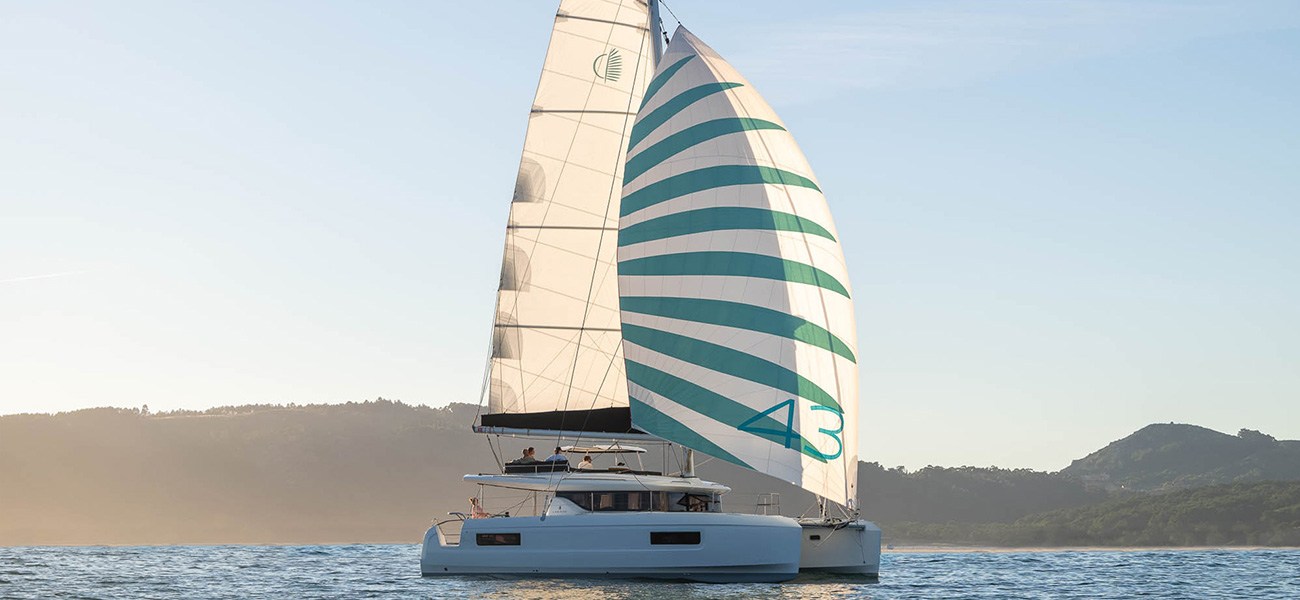
Dual hulls eliminate the rolling motion that triggers most seasickness. The wide beam distributes weight evenly, delivering a 25% reduction in G-forces over waves compared to monohulls. That's why 90–95% of guests on 40+ foot catamarans report zero seasickness symptoms. The usable space rivals a monohull 15–20% longer, giving groups room to spread out. Pricing spans every budget. Sailing catamarans in the 38–42' range start at $185–$250/hour for 6–15 guests. A 44' Leopard runs $318+/hour with capacity up to 49 guests. Premium 55–60' catamarans book at $2,500–$4,300 for 4–6 hours. For multi-day charters, a Lagoon 46 runs $9,100 for two days or $13,650 for three. Power catamarans cruise 15–25 knots, making them the top pick for adventure charters to Catalina.
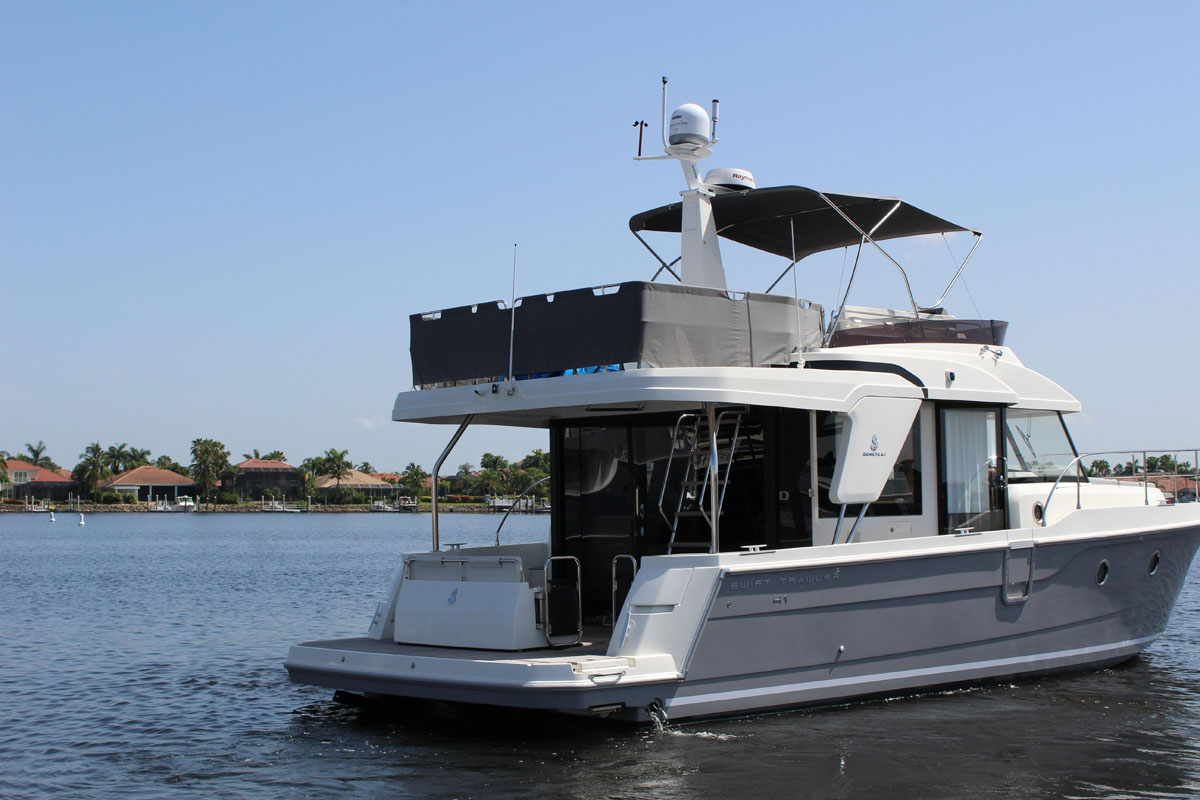
Large motor yachts 50+ feet with stabilizers achieve 85–90% seasickness-free success rates. Seakeeper gyroscopic stabilizers reduce boat motion by up to 95%. Low center of gravity and modern hull profiles cut pounding in open water. A Sunseeker Manhattan 66 books at $12,200 for a 2-day charter or $18,300 for three days. Premium motor yachts in the 60–80' range run $3,300–$6,000 for 4–8 hour captained charters carrying 12–30 guests. For guests who prioritize luxury and comfort over sailing experience, stabilized power yachts deliver the smoothest ride available in this class, making them the top choice for corporate events and special occasions heading offshore.
Sailboats cost less but move more. Understanding the tradeoffs between price, speed, and stability helps you pick the best boat for seasickness based on your route and group. Monohull sailboats heel under wind, which adds a sustained tilt that many guests find disorienting. They also travel slower, extending exposure time on open water crossings. The savings can be significant, but they come with a lower seasickness-free success rate that groups should factor into their decision.
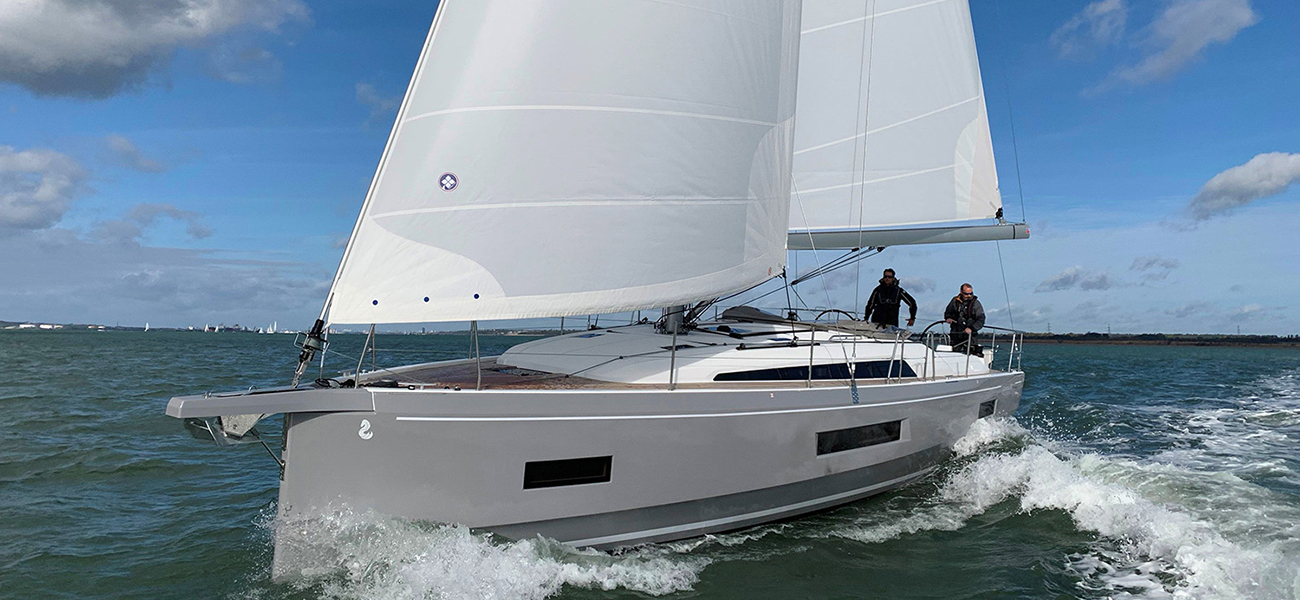
Sailing monohulls post a 50–65% seasickness-free success rate, the lowest of any charter category. Heeling is the issue. When wind fills the sails, the boat tilts and holds that angle. For guests already sensitive to motion, sustained heeling is the fastest trigger. Hourly rates run $100–$185, making a 4-hour charter $400–$740 and a full 8-hour day $800–$1,480. Fuel costs to Catalina are the lowest of any vessel type at $400–$600 round trip. The tradeoff is speed. Sailboats need 4–6 hours for the crossing versus 3–4 for powerboats. Wind dependence also makes schedules unpredictable, which matters on tight timelines or multi-day charters with set itineraries.
Size is the single biggest stability factor after hull type. A 10-foot boat in a 6-foot swell gets tossed. A large vessel in the same swell barely registers it. Boats under 35 feet should be avoided for seasickness-prone guests entirely. Small powerboats under 35' manage only a 60–70% seasickness-free rate. Mid-size powerboats 35–50' improve to 75–85%. At 40+ feet, greater mass and longer waterlines smooth the ride noticeably. Wider beam reduces rocking at anchor. Passive stabilization through broader stern sections, hard chines, and bilge keels adds comfort without mechanical systems. For harbor cruises, 30–45 foot boats handle 6–12 guests well in the calm, protected waters where seasick friendly boats in Newport Beach aren't strictly required.
Shorter routes on calmer water reduce motion exposure. But duration also affects cost, so matching your group's comfort threshold to the right itinerary is key. Harbor cruises keep you in protected flat water where seasickness is virtually nonexistent. Coastal routes introduce moderate swells that larger vessels handle well. Catalina crossings push into open ocean where wave height, wind speed, and crossing time all increase. Each step offshore raises both the adventure level and the importance of choosing the right vessel.
Harbor cruises require a 2–4 hour minimum and run through nearly flat water. Seasickness is a non-issue. The 4–6 hour window is the sweet spot for most events, with diminishing returns on longer durations unless you're heading to Catalina. A 4-hour harbor cruise totals roughly $1,500 for 12 guests. A 6-hour coastal cruise runs about $2,500. The base charter fee covers approximately 60% of total cost. Budget an additional 20–50% for crew gratuity at 15–20%, California sales tax at 7.75%, and fuel surcharges of $40–$80 for harbor routes or $300–$500 for coastal cruising.
Catalina day trips require an 8–10 hour minimum charter at $2,000–$8,000, but island time shrinks to just 2–4 hours. That's why 55% of Catalina bookings are 2-day overnights at $4,000–$15,000. A mid-range 2-day catamaran trip for 10–12 guests totals $6,225–$8,000, or $519–$667 per person. Budget travelers can do a sailing yacht day trip for $1,580–$2,155 ($198–$269/person). Fuel surcharges run $600–$800 regardless of vessel. Mooring at Two Harbors costs $49–$202 per night. Provision $30–$100 per person daily for meals. On-island activities add up: golf carts $50–$75/hour, zip lines $120–$150/person, kayaks $25–$40/hour.
The best boat for seasickness only solves half the equation. Who drives it and how they read the water determines the rest. A skilled captain adjusts speed, heading, and route in real time based on sea conditions and passenger comfort. They know when to slow down, when to change course, and where the calmest corridors run along the Newport Beach coastline and toward Catalina. Crewed charters consistently outperform bareboat rentals for seasickness prevention.
Experienced captains slow down in rough conditions to eliminate pounding. They take waves at 30–45 degree angles instead of head-on or beam-on, which dramatically reduces rolling. When swells build, they route for protected waters and stay in the lee of the coastline. Morning departures are standard practice because seas are calmer before afternoon winds develop. Crewed charters range from $800–$14,000+ depending on the vessel. The captain fee is typically built into the base rate, though some operators charge an additional $60/hour. The critical difference between crewed and bareboat options goes beyond service. Bareboat charters are limited to harbor cruising. Only captained charters can access coastal and open ocean routes, including Catalina crossings.
Most Newport Beach yacht charters are crewed. Captains monitor weather forecasts continuously and adjust itineraries based on real-time sea state and guest comfort. If conditions deteriorate on one heading, they reroute. If a passenger starts feeling uneasy, they reposition. That flexibility is what parents love about our charters. Local captains carry years of knowledge about Newport Beach water patterns, seasonal wind shifts, and the calmest corridors to Catalina. Crewed charters require a minimum age of just 18 to book, versus 25 for bareboat rentals. For a stable boat charter in Newport Beach, the captain's skill matters as much as the hull beneath you.
Group size, budget, and sensitivity level each point toward a different vessel. Match all three and you'll book the best boat for seasickness for your specific crew. Families with motion-sensitive children need different vessels than corporate groups hosting clients or couples planning a romantic Catalina overnight. Preparation also plays a major role. The right medication timing, onboard positioning, and meal planning close the gap between good and great charter experiences regardless of which vessel you select.
Preparation eliminates most problems. Give motion sickness medication 30–60 minutes before departure. Dramamine, Bonine, and prescription scopolamine patches all work. Ginger supplements at 1–2 grams are a natural alternative. Acupressure wristbands apply pressure to the P6 point and reduce nausea without medication, a favorite for kids. Feed the group light, bland foods beforehand. Skip heavy, greasy, or spicy meals. Keep everyone hydrated since dehydration worsens symptoms. Avoid excessive alcohol. Once aboard, stay on deck with good air circulation and avoid enclosed spaces and diesel fumes. Bringing your own food and drinks saves $500–$2,000 over catering packages and lets you control what sensitive stomachs eat.
The numbers are clear. Catamarans 40+ feet achieve a 95% seasickness-free success rate. Large powerboats 50+ feet with stabilizers hit 88%. Mid-size powerboats land at 78–80%. Small powerboats under 35 feet drop to 65%. Sailing monohulls trail at 55–58%. Harbor routes carry virtually zero seasickness risk regardless of vessel. For the best value on seasick friendly boats in Newport Beach, book weekdays for up to 40% savings. October offers rates 25–40% below peak pricing. Booking 12+ months ahead unlocks 5–15% discounts and the widest selection. Coast Guard regulations cap most charters at 12 guests. Groups of 20+ need certified catamarans or mega yachts, but per-person cost drops significantly with size, from roughly $500 per person with 6 guests to $275 with 40.
Choose a catamaran 40+ feet if your group includes anyone prone to seasickness — the 95% seasickness-free success rate and dual-hull stability make it the safest option for sensitive guests. Choose a stabilized power yacht when you want premium comfort on a Catalina overnight — Seakeeper gyroscopic systems reduce motion by up to 95% and deliver a luxury experience. Choose a harbor cruise when seasickness is a serious concern and your group wants a relaxing day on flat, protected water with virtually zero risk. Choose a sailboat when budget is the top priority and your route stays near shore — rates start at $100/hour, but the 50–65% seasickness-free rate means preparation is essential.
A catamaran makes sense for families, weddings, and groups of 6–49 where comfort is non-negotiable. Expected outcome: 90–95% of guests report zero symptoms across harbor, coastal, and open water routes. A stabilized power yacht makes sense for corporate events, multi-day Catalina overnights, and groups willing to invest in a premium experience. Expected outcome: 85–90% seasickness-free success rate with luxury amenities and faster cruising speeds. A sailboat makes sense for budget-conscious couples or small groups staying within harbor or near-shore waters on calm days. Expected outcome: 50–65% seasickness-free rate, offset by the lowest per-hour charter cost available.
Newport Beach Sailing Charters & Yacht Rentals operates one of the largest fleets in the harbor, covering catamarans, stabilized power yachts, sailing monohulls, and luxury mega yachts. Every captain carries years of local experience navigating Newport Harbor, the Orange County coastline, and the Catalina crossing. The team matches vessels to guest sensitivity levels before booking, not after problems start on the water. Pricing transparency, real seasickness-free success rate data, and pre-departure preparation guidance are included with every charter.
Book with Newport Beach Sailing Charters when your group includes guests who are prone to motion sickness and you need expert vessel matching. Book with us when you want a captained charter with real-time route adjustments based on sea conditions. Book with us for Catalina crossings where captain expertise and stabilized vessels make the difference between a great trip and a miserable one. Book with us when you want transparent pricing and preparation support before you step on the dock.
If you are an experienced sailor looking for a bareboat rental to captain yourself within the harbor, a self-service rental company may offer a lower rate. If your group has zero seasickness concerns and you simply want the cheapest available vessel for a short harbor loop, a no-frills operator may be sufficient. Newport Beach Sailing Charters is built for groups that value comfort, safety, expert guidance, and the confidence that every guest will enjoy the trip.
Newport Beach Sailing Charters & Yacht Rentals matches every group with the right vessel for their comfort level. Whether you need a 40+ foot catamaran for seasickness-prone guests, a stabilized power yacht for a Catalina overnight, or a calm harbor cruise for the family, our captains build every trip around your group's needs. Tell us your headcount, sensitivity concerns, and preferred route. We'll recommend the best boat for seasickness and handle the rest. Book your charter today.
This guide was written by the charter advisory team at Newport Beach Sailing Charters & Yacht Rentals, drawing on over a decade of experience matching groups with the right vessels for comfort and safety. The team has coordinated thousands of charters across Newport Harbor, the Orange County coastline, and the Catalina Island crossing, with direct knowledge of local sea conditions, seasonal patterns, and vessel performance. For personalized recommendations based on your group’s needs, contact the team directly.