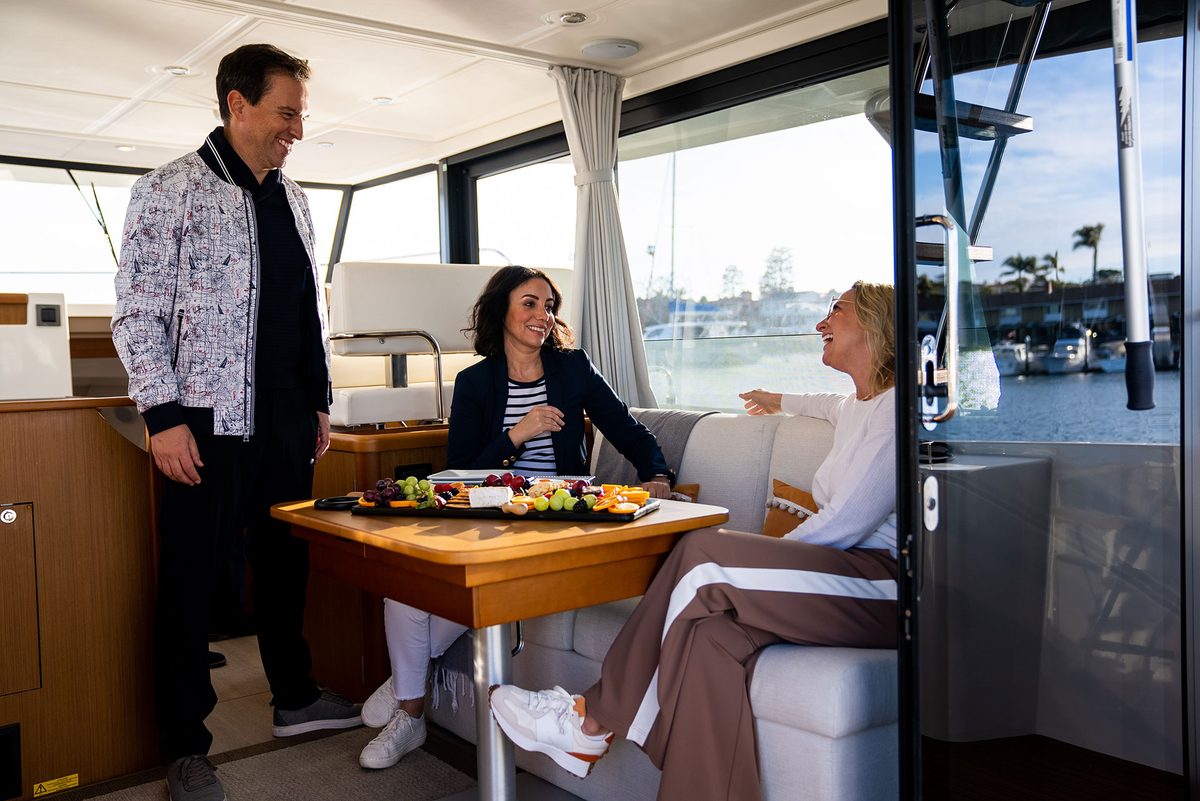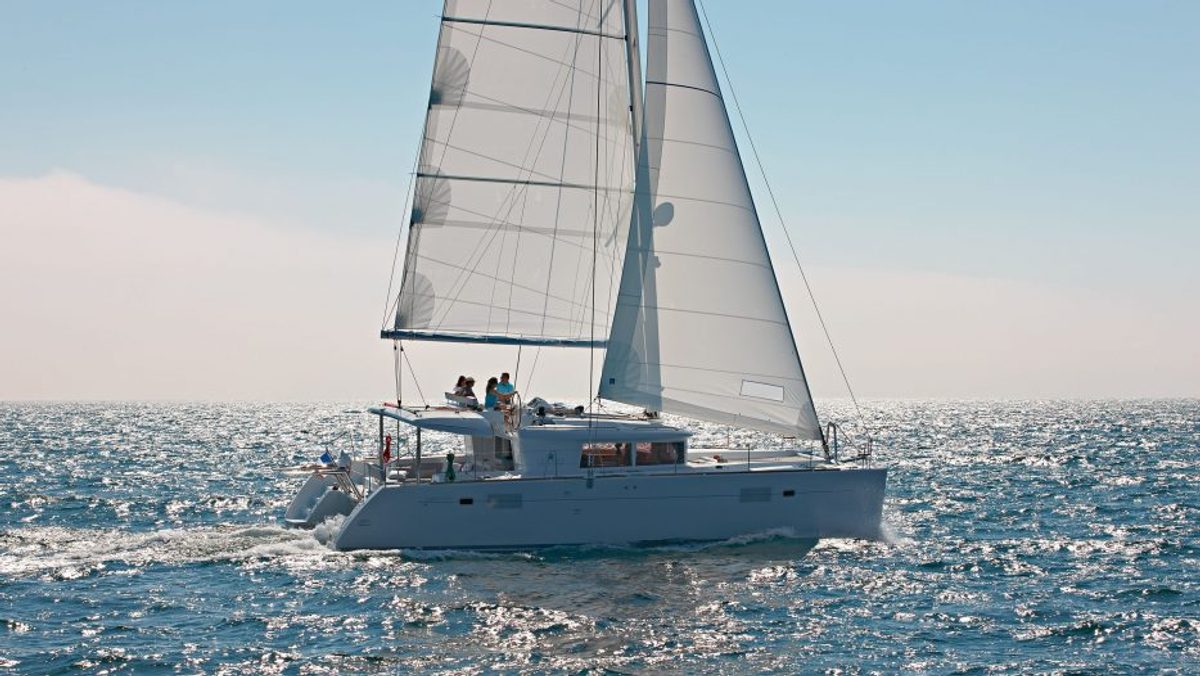


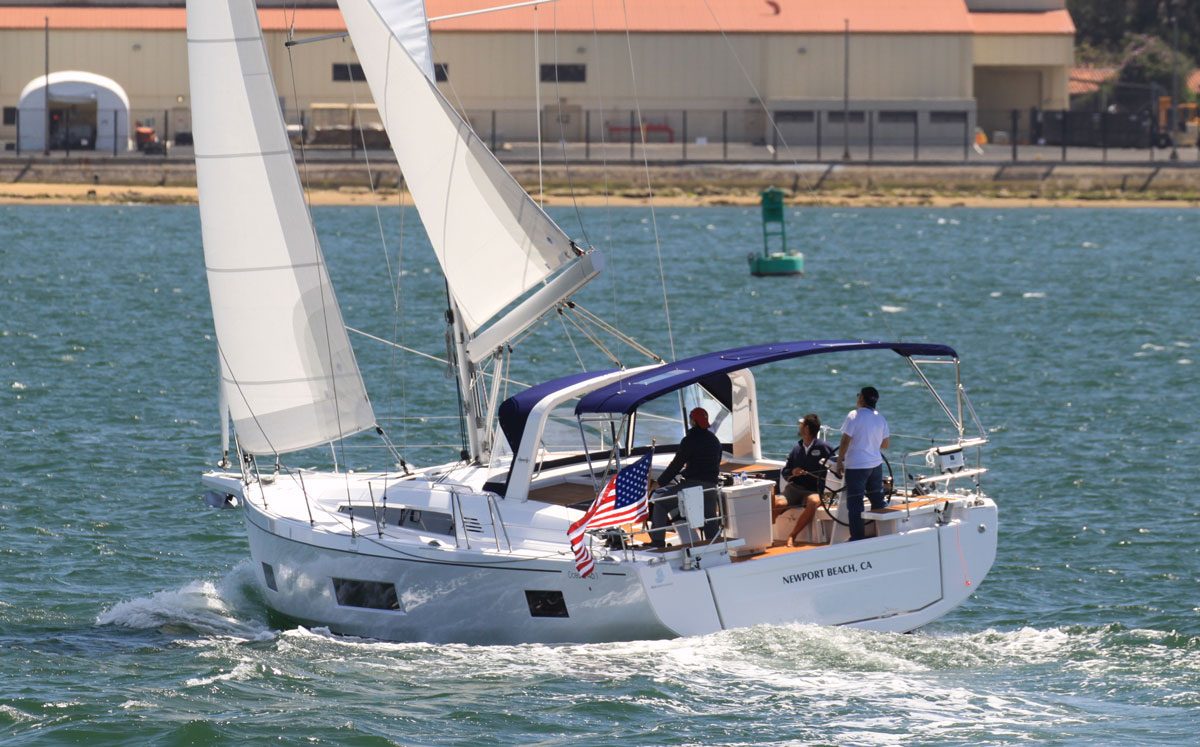
Most guests booking a Newport Beach yacht charter do not need a yacht charter license because the company provides a professional skipper. A captained charter places a licensed U.S. Coast Guard captain aboard to run the vessel and oversee safety. Guests enjoy private yacht experiences without boat operator credentials or busy harbor traffic.
Bareboat charters work differently. They transfer vessel possession and control to the renter, who then handles routing, provisioning, and compliance. Below, you will find how skippered and bareboat charters compare, when California boating rules apply, what each option costs, and how to match the right yacht charter types to your trip.
Guests on captained yacht charters do not need a yacht charter license because a licensed professional runs the vessel. The company keeps a credentialed captain aboard to handle routing, safety gear, and federal passenger-vessel rules. This removes licensing concerns while keeping full legal and operational standards.
A captain also sets a calm, stress-free tone so guests focus on the celebration. Federal rules require self-propelled uninspected passenger vessels to carry a credentialed operator. Seeing how captained vs bareboat models differ shows why the operator handles licensing on skippered trips.
A skippered charter includes a professional captain who runs or supervises every vessel operation. Captains hold U.S. Coast Guard credentials and often carry American Sailing Association instructor certifications, and Newport Beach Sailing Charters & Yacht Rentals keeps one aboard for every charter. The captain manages harbor traffic, weather calls, mooring, and safety, so guests gain that experience without proving credentials or planning a route.
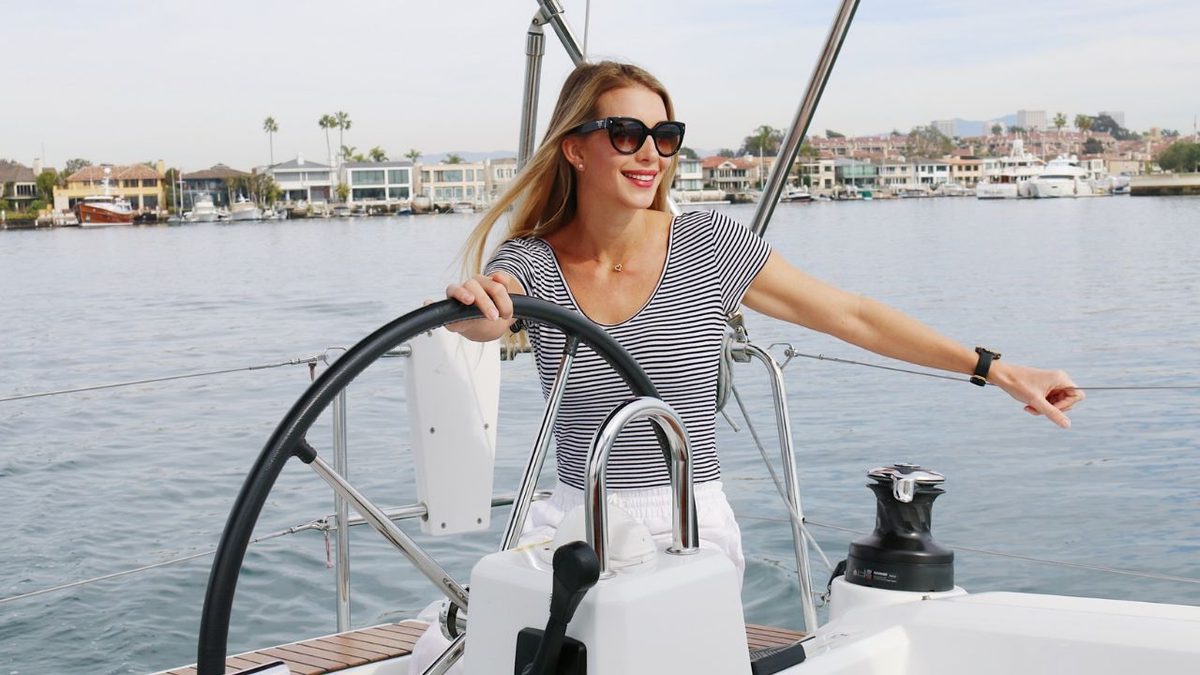
Guests can take the wheel or trim sails while the captain stays close to guide and supervise. This interactive model lets guests learn technique or enjoy hands-on time without full responsibility. Some guests relax while the captain handles everything; others steer under supervision, and the balance suits adventurous and relaxed groups alike.
Federal law 46 U.S.C. § 8903 requires self-propelled uninspected passenger vessels to be run by a licensed individual. Regulation 46 CFR § 15.605 further requires a credentialed operator, including an Operator of Uninspected Passenger Vessels endorsement or equivalent. These standards protect passengers and hold operators accountable.
Commercial charters are regulated differently from recreational boating because of the consideration definition in 46 CFR § 24.10-1. Consideration means economic benefit or payment, and it excludes friends voluntarily sharing actual voyage costs. Paid trips trigger federal passenger-vessel rules, while split fuel costs stay under recreational rules.
Skippered and bareboat charters are two yacht rental models with different responsibility levels. A skippered charter includes a licensed captain who runs or supervises the vessel. Bareboat charters transfer possession and control to the renter, who must steer, provision, and manage the boat or hire crew separately.
The right choice depends on sailing experience and how involved you want to be. Skippered charters suit guests who want guidance and less planning; bareboat charters suit experienced boaters who want full control.
A captained charter places a licensed captain aboard to run or supervise every function. Guests need no captain's license, because the skipper handles routing, harbor traffic, and safety. This delivers a private yacht experience without complex logistics or boating credentials.
Guests may still join in under supervision. The captain shares local knowledge of Newport Harbor, coastal routes, and Catalina Island while keeping operations smooth and compliant.
A bareboat or demise charter transfers possession and control to the charterer, who may run the vessel personally or hire crew and takes on route planning, fuel, and emergency decisions. Requirements usually include proof of sailing experience, security deposits, and insurance, plus provisioning, mooring fees, and local compliance during the rental. This raises effort but gives experienced boaters more control.
Captained charters carry a lower planning burden. The company supplies the vessel, captain, safety gear, and cleanup, and the captain manages routing through Newport Harbor and meets Coast Guard safety rules.
Bareboat charters carry a higher burden because the charterer handles routing, compliance, provisioning, and fuel. The charterer also makes mooring and anchoring calls and manages deposits. A company that markets a trip as bareboat while still controlling the vessel or crew can create compliance problems.
| Factor | Skippered (Captained) Charter | Bareboat Charter |
|---|---|---|
| Vessel control | Licensed captain runs or supervises | Renter takes possession and control |
| License for guests | None required | Sailing resume or certification often required |
| Routing and safety | Handled by the captain | Handled by the charterer |
| Provisioning and fuel | Included or arranged by the company | Arranged by the charterer |
| Planning burden | Low | High |
| Liability | Captain and company | Charterer |
| Suited for | Celebrations, first-timers, unfamiliar waters | Experienced, certified sailors |
California boating rules mainly affect people who personally operate motorized vessels, not guests on captained charters. The state requires motorized-vessel operators to complete a safety course and hold a California Boater Card. These rules usually do not apply to guests aboard a captained charter, because the licensed captain runs the boat.
The state and federal split decides when licensing applies. Captained-charter guests sail without meeting operator-education mandates; bareboat charterers must follow state rules if they operate the vessel themselves.
California requires all motorized-vessel operators to hold a California Boater Card as of January 1, 2025, after finishing a state-approved safety course. The card applies to people personally operating motorized vessels, not passengers on captained charters. Licensed captains already hold federal credentials that exceed state recreational standards, so guests aboard a professionally run yacht do not need one.
Captained-charter guests usually do not need a California Boater Card, because they are passengers, not operators. The licensed captain holds federal credentials and takes responsibility for operation and compliance, which keeps full legal and safety standards.
Knowing who operates the vessel clarifies when California rules apply. Guests on day charters sail without proving boating education or holding state credentials. The captain's federal licensing meets every requirement for commercial passenger trips in California waters.
Federal law defines an uninspected passenger vessel as one carrying six or fewer passengers. A small passenger vessel is under 100 gross tons and carries more than six, which triggers different inspection and crew rules. These classes decide which federal rules apply.
State rules govern recreational boating education and safety; federal law governs commercial passenger operations and crew licensing. Paid charters must meet federal credentialing, while friends splitting real voyage costs stay under recreational rules.
Captained charters bring professional handling of busy harbor traffic and coastal routes. A licensed captain knows mooring spots, weather patterns, and destinations like Catalina Island and Laguna Beach, which makes trips safer for guests new to Southern California waters.
The captain carries the operational load so guests focus on the celebration, relaxation, or hands-on sailing. Families, couples, and corporate groups get low-stress planning and flexible participation. You can meet our captains before you book.
Newport Harbor brings heavy traffic, wake zones, and shifting tides. A local captain knows harbor rules, right-of-way, and safe passage through crowded channels in peak season. That knowledge prevents groundings, collisions, and violations.
Coastal routes to Emerald Bay and Laguna Beach need weather and tide awareness. The captain checks wind, swell, and visibility before departure and decides when to sail, motor, or adjust the plan for guest comfort and safety.
Captained charters fit families, romantic sails, corporate events, birthdays, Catalina trips, and team-building regattas. Multi-day routes reach Catalina Island, the Channel Islands, and other Southern California islands, while day trips reach Emerald Bay, Laguna Beach, Avalon, and Two Harbors. The fleet holds 2 to 12 passengers and runs 3 to 8 hours, and the captain coordinates catering, decorations, and smooth event flow.
Licensed captains track marine forecasts and adjust plans for wind, swell, and visibility, deciding whether to hold the route or change destinations. Real-time calls prevent seasickness, equipment damage, and risk. Safety-gear checks, emergency drills, and Coast Guard compliance stay with the captain, who confirms life jackets, extinguishers, flares, and communication gear are aboard and working.
Captained charters let guests take part without holding full control or liability. Guests can steer, trim sails, and learn technique under supervision while the captain keeps overall responsibility. The captain adjusts involvement to comfort, weather, and difficulty: beginners get patient instruction on the basics, while experienced sailors talk through sail trim and route strategy.
Guests can take the helm while the captain watches speed, traffic, and routing and gives quick feedback on steering and sail trim. Trimming sails, raising anchor, and handling lines become easy when the captain shows the technique. This supervised role creates memorable moments without the stress of full responsibility, and guests learn how sail shape affects speed.
Captained charters remove stress around routing, weather, and emergencies. The captain holds operational liability while guests enjoy the scenery and rest, and insurance, deposits, and compliance stay with the company. Guests skip float plans, fuel checks, and mooring reservations and simply enjoy Newport Harbor boat rentals without operational worries.
Captained charters satisfy the adventurous side while holding professional safety standards. Guests reach destinations like Catalina Island knowing an expert handles routing and weather, which opens tougher cruising areas to mixed-experience groups. The captain encourages the right level of participation and prevents unsafe moves, so guests feel the thrill of sailing without owning collision avoidance, grounding prevention, or emergency response.
Skippered and bareboat charters are priced differently. Captained charters build crew, safety oversight, and operations into the base price, while bareboat charters can look cheaper up front but add costs for self-management or hired crew.
Risk shifts with control. Captained charters keep liability with the captain and company, which protects guests from damage exposure. Bareboat charters move risk to the charterer for damage, groundings, and claims, so review the charter costs before you book.
Captained charter pricing at Newport Beach Sailing Charters & Yacht Rentals covers the yacht, captain, safety gear, cleaning, and sailing-charter fuel. Powerboat fuel is billed separately because it burns more. Mooring and anchoring fees are included for standard destinations.
Gratuity is not included and usually runs about 15%. The captain plans the itinerary, handles routing, and preps the vessel with no extra planning or crew fee. Guests see clear pricing with no hidden charges.
| Captained Charter Item | Status |
|---|---|
| Yacht and licensed captain | Included |
| Safety gear and cleaning | Included |
| Sailing-charter fuel | Included |
| Mooring and anchoring (standard spots) | Included |
| Powerboat fuel | Charged separately |
| Gratuity (about 15%) | Not included |
| Catering and personal provisions | Optional |
Bareboat costs can include a base fee, security deposit, insurance or damage exposure, fuel, docking or mooring fees, plus provisioning, cleaning, and any hired crew, so the total runs well beyond the advertised rate. Deposits often reach thousands of dollars, and the charterer takes on hull damage, sail tears, rigging faults, and routing errors. Insurance may require proof of experience or certification courses.
Captained charters move operational risk to the captain and company instead of the guests. The captain's federal credentials and the company's commercial insurance shield guests from exposure tied to routing errors or damage. That transfer gives peace of mind to guests new to yachts.
Bareboat charters require the charterer to carry insurance or accept liability through deposits and contract terms. The company may require proof of certification, a logbook, or a skills check before releasing the vessel, which places risk on the charterer.
The choice depends on experience, the control you want, and your comfort with routing responsibility. Captained charters suit guests who want guidance and less planning for special days and unfamiliar waters, while bareboat charters suit certified sailors who accept full control. Trip details also shape the call: multi-day trips to Catalina Island or the Channel Islands gain from a captain's route knowledge, and day sails turn into stress-free celebrations when the captain runs the details.
Captained charters work well for first-time guests, families, romantic sails, corporate events, birthdays, and Catalina trips, where celebration matters more than operational control. Bareboat charters suit experienced, certified boaters who want full control and accept routing responsibility, including weather calls, emergencies, and anchoring or mooring.
Newport Beach Sailing Charters & Yacht Rentals runs sailboats, catamarans, and powerboats in a range of sizes. Each boat holds 2 to 12 passengers. Babies count as passengers under Coast Guard rules, so plan capacity carefully.
Day charters of 3 to 8 hours fit harbor tours, sunset sails, and coastal trips, and our sailing calendar shows strong months for each. Multi-day trips to Catalina Island and the Channel Islands need more planning and overnight prep that gain from captain expertise. Group mix matters when pairing seasoned sailors with first-timers or running corporate events.
Captained planning means picking a yacht, setting duration and destination, and sharing itinerary preferences with the captain. The company preps the vessel, safety gear, and compliance while guests handle personal items. Paperwork includes a charter agreement and liability waivers covering terms and safety.
Bareboat planning means float plans, weather tracking, chart prep, and provisioning for everyone aboard. The charterer must show sailing competence, provide deposits, and arrange insurance before taking the vessel, then cover fuel, mooring, emergencies, and returning the boat as it left.
Newport Beach Sailing Charters & Yacht Rentals does not charter boats without a captain, per company policy. An actively licensed U.S. Coast Guard captain stays aboard at all times for safety, compliance, and expert handling. The policy protects guests from operational liability while adding supervision and local knowledge.
Clear pricing covers yacht rental, captain, safety gear, cleaning, and most sailing fuel, with gratuity and optional catering added. A short set of planning tips helps you line up timing, destinations, and special requests. Direct booking removes third-party fees and keeps communication with the operator running your trip.
Captains hold U.S. Coast Guard licenses and often carry American Sailing Association instructor certifications, with deep experience across Newport Harbor and the islands. When choosing a charter company, compare credentials, transparency, fleet quality, and included services. Whether you plan a sunset sail, a corporate event, or a multi-day Catalina trip, a licensed captain keeps operations smooth and the day memorable.
Ready to sail without the licensing questions? Newport Beach Sailing Charters & Yacht Rentals has run captained charters out of Balboa Marina since 2006, with a licensed U.S. Coast Guard captain on every trip. Call (800) 609-3203 or request a quote to plan a private day charter, a sunset sail, or a multi-day Catalina adventure. Book direct for clear pricing and no third-party fees.
No. On a captained charter, guests do not need a yacht charter license because a licensed U.S. Coast Guard captain runs the vessel. The captain handles routing, safety, and federal passenger-vessel rules. You would only need a personal license to take full control of the boat on a bareboat charter, which Newport Beach Sailing Charters & Yacht Rentals does not offer.
A skippered charter includes a licensed captain who runs or supervises the vessel, so guests can relax or join in under supervision. A bareboat charter transfers possession and control to the renter, who handles routing, provisioning, and compliance. Skippered charters carry a lower planning burden and keep liability with the captain and company. Bareboat charters suit certified, experienced sailors who want full control.
No. The California Boater Card applies to people who personally operate a motorized vessel, not to passengers. On a captained charter, the licensed captain holds federal credentials that exceed the state requirement. Guests can sail, steer under supervision, or relax without holding a California Boater Card.
Yes. Guests can take the helm, trim sails, and learn technique while the captain supervises. Involvement is flexible, so you can be hands-on or simply enjoy the ride. The captain keeps overall responsibility for safety and routing throughout.
Pricing at Newport Beach Sailing Charters & Yacht Rentals covers the yacht, licensed captain, safety gear, cleaning, and sailing-charter fuel. Mooring and anchoring fees are included for standard destinations. Powerboat fuel is billed separately, and gratuity of about 15% is not included. Optional catering and personal provisions are extra.